Your Ultimate Guide to FindingProfessional Web Content Creation Services
Hansjan Kamerling
Jan 29, 202617 min read
Why Finding the Right Content Creation Services Can Transform Your Business
professional content creation services - content creation services
Content creation services are professional offerings that help businesses produce written, visual, and audio content to engage audiences, build brand authority, and drive measurable results. These services can include everything from blog posts and video production to SEO optimization and content strategy.
The numbers tell a compelling story: companies that blog consistently produce 67% more leads than those that don't. Content marketing generates over three times as many leads as traditional outbound marketing while costing 62% less. Furthermore, 70% of users prefer learning about a company through articles rather than advertisements.
Yet for many businesses, creating high-quality content at scale is a major challenge. It involves juggling keyword research, writing, editing, optimization, and distribution—all while maintaining consistency. The manual intensity of these tasks creates a bottleneck that limits growth.
This is where professional content creation services become a strategic advantage. They're not just about outsourcing work; they're about accessing specialized expertise, proven processes, and the bandwidth to scale without sacrificing quality. The right partner can transform your content from a time drain into a growth engine.
I'm Hansjan Kamerling, and I've spent over a decade helping businesses scale through strategic marketing. I've seen how the right content partner makes the difference between struggling to keep up and achieving predictable, scalable growth.
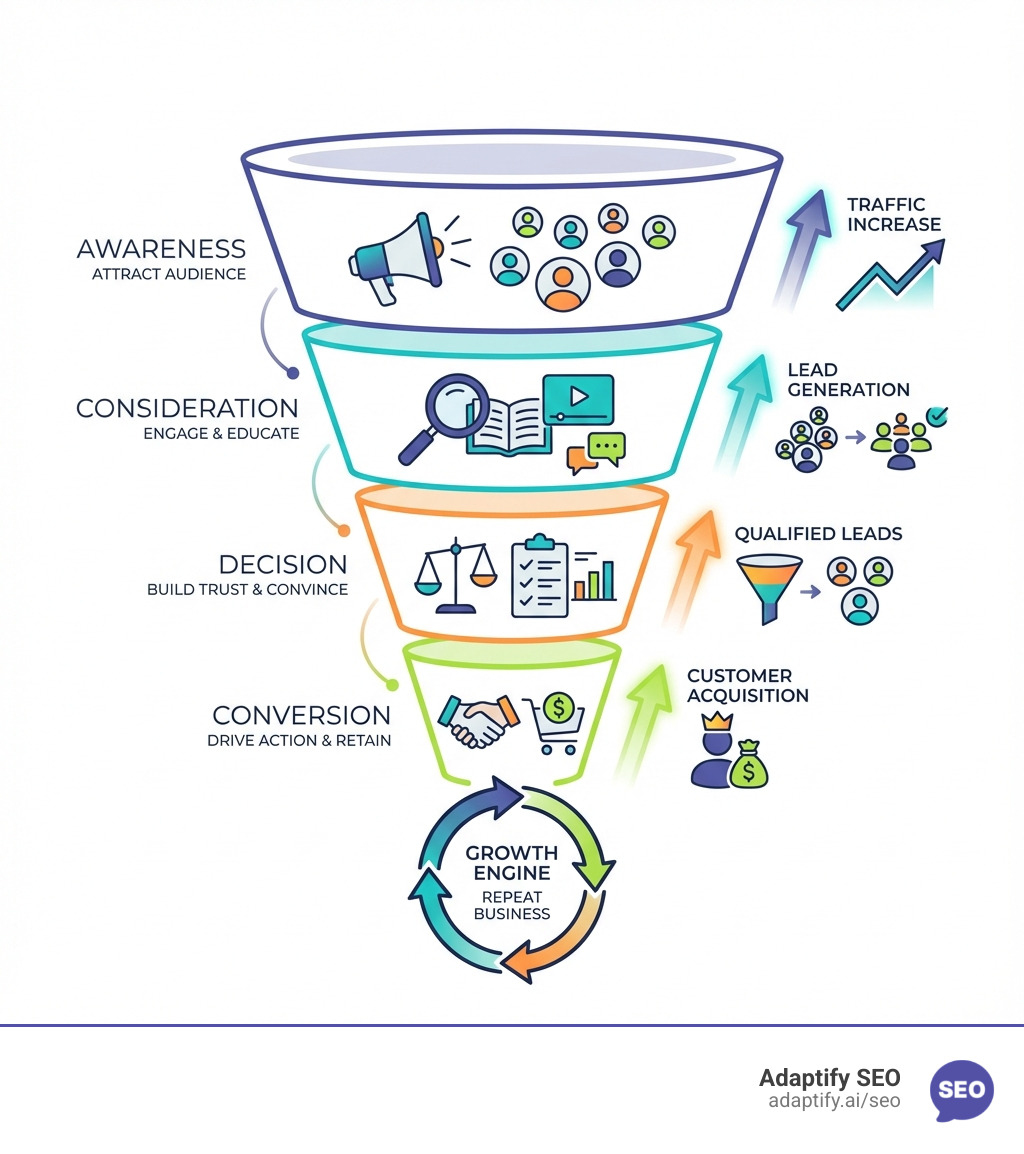
infographic showing the content marketing funnel from awareness stage through consideration, decision, and conversion, with metrics for traffic increase, lead generation, and customer acquisition at each stage - content creation services infographic
What Are Content Creation Services? A Breakdown of Your Options
When I talk about content creation services, I'm referring to a broad spectrum of specialized offerings designed to produce compelling, strategic content. Think of it as having an entire creative department at your fingertips, ready to craft your brand's message in virtually any format. The goal is to tell your brand's story in a way that resonates with your target audience and achieves your business objectives.
different types of content on various devices - content creation services
A "Published Asset" is any finished, fully edited piece of content that’s optimized and delivered ready to publish. This wide scope ensures that whether you need a quick social media post or an in-depth white paper, a professional service can deliver.
If you want a broader primer on how different formats work together in digital marketing, the overview on content marketing is a useful external reference point.
Written Content: Blogs, Articles, and White Papers
Written content remains the backbone of many digital marketing strategies. It's how you establish authority, inform your audience, and guide them through their customer journey.
Blog posts and articles are fantastic for driving organic traffic and building trust. Companies that blog consistently produce 67% more leads than those that don't.
Website copy and landing pages are crucial for converting visitors into leads or customers, guiding users with clear calls to action.
eBooks and white papers position your brand as a thought leader. These longer-form pieces provide in-depth insights and are excellent lead magnets.
Press releases are vital for announcing company milestones, product launches, or significant news.
SEO content is specifically crafted to rank high on search engines, including keyword-rich articles and product descriptions.
Copywriting covers everything from ad copy to email sequences, all aimed at persuading and driving specific actions.
Technical writing translates complex information into clear, understandable documentation, which is critical for SaaS products or specialized industries.
Thought leadership content establishes your expertise by demonstrating a deep understanding of industry trends and challenges.
Visual Content: Video, Graphics, and Social Media
In today's visually-driven world, appealing to the eye is non-negotiable. Visual content captures attention, conveys complex ideas quickly, and fosters stronger emotional connections.
Video production, including short-form videos for platforms like TikTok and Instagram Reels, explainer videos, and commercial content, is incredibly powerful.
Infographics and graphic design transform data and complex concepts into easily digestible, shareable visuals.
Social media content is custom-made for various platforms (LinkedIn, Facebook, Instagram, X/Twitter, TikTok) and includes everything from engaging posts to user-generated content (UGC) campaigns.
Photography involves on-site shoots, editing, and even AI-improved imagery to create stunning visuals that represent your brand.
Data visualizations help communicate insights from complex datasets in an accessible and engaging manner.
Audio and Interactive Content
As audiences seek more immersive experiences, audio and interactive formats are gaining significant traction.
Podcasts offer a unique way to connect with listeners, share expertise, and build a loyal community.
Voice notes and webinars provide direct, personal communication and opportunities for live engagement.
Interactive tools and quizzes increase user engagement on your website, collecting valuable data while entertaining your audience.
E-learning modules offer structured educational content, often incorporating videos, text, and quizzes, which is valuable for training or product adoption.
The Strategic Power of Content: Fueling Growth and Engagement
Content isn't just about filling a website; it's a strategic asset that fuels every aspect of your business growth. From making your brand recognizable to guiding customers through their purchasing decisions, content is the engine of modern marketing.
graph showing upward trends in traffic and leads - content creation services
Building Brand Awareness and Authority
In today's crowded digital landscape, standing out is a challenge. Content is your megaphone. It's how you establish your brand's presence and cultivate trust.
High-quality, informative content positions a company as a go-to resource in its industry. This aligns perfectly with Google's E-E-A-T guidelines (Experience, Expertise, Authoritativeness, Trustworthiness), which are crucial for search engine rankings. When you consistently publish valuable content, you're not just getting clicks; you're building credibility.
The statistics back this up: 70% of users prefer getting to know a company through content, like articles or blog posts, rather than advertisements. This preference highlights the power of educational and informative content in building genuine connections. For more insights into how content can improve your online presence, I recommend exploring more info about content services.
Driving Customer Engagement and Nurturing Leads
Content plays a pivotal role throughout the entire customer journey, from initial awareness to post-purchase loyalty. It's how you engage your audience, answer their questions, and gently guide them towards a purchase.
Companies that blog consistently produce 67% more leads than those that don't. This isn't just about attracting new visitors; it's about providing value that encourages them to opt-in, subscribe, and engage further. Content helps nurture leads by addressing their pain points, offering solutions, and building a relationship over time. Strategic content, especially on social media, can significantly boost engagement and nurture potential customers.
The Cornerstone of Your Digital Marketing Strategy
Content isn't just a part of your digital marketing strategy; it's the foundation upon which everything else is built. It fuels your SEO, provides material for social media, and forms the basis of your email campaigns.
Content marketing generates over three times as many leads as outbound marketing and costs 62% less than traditional marketing. This efficiency makes it an indispensable tool for businesses looking for sustainable growth. A multi-channel approach, where content is adapted and distributed across various platforms, ensures consistency in your brand message and maximizes reach.
Without a robust content strategy, your other marketing efforts might feel like shouting into the void. Content provides the substance that makes your digital marketing efforts effective. To understand how content integrates into broader digital marketing initiatives, you might find more info about SEO proposals helpful.
SEO Content Creation Services: What Your Business Really Needs
If you want your business to be found online, you need more than just content; you need SEO content. This specialized form of content creation is designed to satisfy both your human readers and the complex algorithms of search engines. It's about getting your message to the right people, at the right time, when they're actively searching for solutions you provide.
Understanding SEO Content Writing vs. General Writing
This is a distinction I often clarify for clients. While all good writing aims to inform or persuade, SEO content writing has a specific, additional layer of strategy.
SEO content writing is an element within an overall SEO strategy. It focuses on creating content that incorporates relevant keywords, is optimized for on-page SEO elements (like meta descriptions, header tags, and internal linking), and aims to rank on search engine results pages (SERPs). The goal is to drive organic traffic by answering user queries and demonstrating expertise.
General content writing, while still important for brand communication, might prioritize creative expression or storytelling without the same explicit focus on keyword optimization and search engine visibility. It might be excellent for engaging an already acquired audience but less effective at attracting new ones via search.
Effective SEO content writing requires a deep understanding of keyword research and user intent. It's not about keyword stuffing; it's about seamlessly integrating terms that your target audience uses into valuable, readable content. For more on the technical side of SEO, including how backlinks contribute to ranking, check out more info about backlinks.
How to Leverage SEO to Dominate Search Rankings
Leveraging SEO effectively is key to dominating search rankings. It's a multi-faceted approach that goes beyond just writing.
Target Keywords and Searcher Intent: The process should always start with identifying target keywords that align with your business offerings and what your clients are actively searching for. It's crucial to understand the intent behind those searches (e.g., informational, transactional).
On-Page Optimization: This involves structuring your content with proper header tags (H1, H2, H3), optimizing meta descriptions to encourage clicks, and ensuring your content is easy to read.
Content Audits: Regularly reviewing existing content to identify gaps, update outdated information, and improve SEO performance is essential.
Link Building: Earning high-quality backlinks from other reputable websites signals to search engines that your content is valuable and authoritative.
E-E-A-T Signals: Google highly values Experience, Expertise, Authoritativeness, and Trustworthiness. High-quality, well-researched content strengthens these signals.
SERP Features: Aiming for featured snippets, "People Also Ask" boxes, and other SERP features can significantly increase visibility.
Tailoring Content for B2B, B2C, and SaaS Models
The type of content you create also needs to be custom to your specific business model. What works for a consumer brand won't necessarily resonate with a business client.
B2B (Business-to-Business) Content: This content often focuses on solving complex business problems, demonstrating ROI, and building trust. It's typically longer-form (white papers, case studies, in-depth articles) and appeals to logical decision-making.
B2C (Business-to-Consumer) Content: This content is usually more emotionally driven, lifestyle-oriented, and engaging. It includes blog posts, social media content, customer stories, and visually rich media.
SaaS (Software-as-a-Service) Content: This niche requires technical expertise combined with marketing savvy. Content includes product guides, tutorials, comparison articles, and use cases that highlight the software's value proposition. It often aims to educate users, drive adoption, and reduce churn.
How to Choose the Right Content Creation Partner
Selecting the right content creation services partner is a critical decision that can significantly impact your marketing success. It's not just about finding someone who can write; it's about finding a strategic ally who understands your goals, your audience, and your industry.
Key Criteria for Vetting an Agency
When I'm evaluating potential partners, I look for several non-negotiable criteria:
Industry Expertise: Does the agency understand your niche? An agency with experience in your industry will grasp its nuances and be better equipped to create content that resonates.
Portfolio Review: Always ask to see examples of their work. Look for quality, relevance, and results. Do they have case studies that demonstrate measurable success?
Client Testimonials and Reviews: What do their past and current clients say? Look for reviews on reputable third-party platforms.
Communication Process: How do they communicate? A clear, consistent communication process is vital for project success.
Pricing Models: Understand their pricing structure. Is it project-based, retainer, or per-word? Does it align with your budget and expected ROI?
Technology Stack: Do they leverage modern tools for keyword research, content optimization, and project management?
You're not just hiring writers; you're bringing on an extension of your marketing team.
The Core Benefits of Outsourcing Your Content Creation services
Outsourcing your content creation services offers a multitude of advantages that can significantly boost your agency's efficiency and growth.
Increased Bandwidth: This is often the primary driver. Outsourcing frees up your internal team to focus on core business strategies, client relationships, and other high-level tasks.
Focus on Core Business: By offloading content production, you can dedicate more resources and attention to what your agency does best, whether that's SEO strategy, web development, or client management.
Cost Savings vs. In-House: Hiring, training, and retaining an in-house content team can be expensive. Outsourcing often provides access to specialized talent at a fraction of the cost.
Access to Specialized Talent: Agencies often boast a diverse network of highly vetted writers with expertise across various industries and content types. This means you can tap into exactly the right skill set for each project.
Faster Turnaround: Professional content creation services are built for efficiency, with streamlined processes and dedicated teams that can deliver high-quality content quickly.
Scalability: Whether you need 5 articles or 50, an external partner can scale production up or down to meet your fluctuating demands without the overhead of hiring and firing.
In my experience, the strategic benefits of outsourcing far outweigh the perceived challenges, allowing agencies to deliver more for their clients without the added stress.
Measuring ROI and Navigating the Future of Content
Investing in content creation services is a strategic move, but like any investment, it needs to show a return. Understanding the costs involved and how to measure ROI is crucial. Moreover, the content landscape is constantly evolving, with new technologies and formats reshaping how we create and consume information.
Metric / Aspect
Traditional Marketing (e.g., Print Ads)
Content Marketing (e.g., Blog Posts)
Cost
High upfront, recurring for each campaign
Lower, compounding value over time (62% less)
Lead Generation
Direct, often cold
Indirect, permission-based, nurtures leads (3x more leads)
Customer Preference
Often seen as interruption (70% prefer content)
Builds trust, informs, engages
Longevity
Short-lived, campaign-specific
Evergreen potential, continues to drive traffic/leads
Understanding the Costs of Professional Content Creation services
The costs associated with content creation services can vary widely based on the type, volume, and complexity of content, as well as the agency's expertise and service model.
Pricing Models: Agencies typically offer various pricing models, including project-based fees, monthly retainers, and per-word rates.
Typical Cost Ranges: While it's difficult to give exact figures, basic content plans can start in the low thousands per month, with more comprehensive or specialized engagements costing more.
Value vs. Cost: It's important to view content creation as an investment. A published article, for instance, can be considered a digital asset with an upfront cost but the potential for long-term organic traffic and significant cost savings compared to paid advertising. A single well-ranked article can generate organic traffic that would otherwise cost thousands per month in ad spend.
Key Metrics for Measuring Content ROI
Measuring the Return on Investment (ROI) of your content marketing efforts is essential for demonstrating its value and optimizing your strategy. Here are the key metrics I focus on:
Organic Traffic: The number of visitors coming to your site from search engines.
Keyword Rankings: Tracking your position for target keywords helps assess your content's visibility.
Conversion Rates: How many visitors complete a desired action (e.g., fill out a form, download an eBook).
Leads Generated: The number of new prospects acquired through your content.
Engagement Metrics: Time on page, bounce rate, and social shares indicate how well your content resonates with your audience.
Backlinks Acquired: High-quality content naturally attracts backlinks, which are crucial for SEO.
Tools like Adaptify.ai's SEO calculator can help you estimate potential ROI and track these metrics effectively. For more details, you can visit more info about our SEO calculator.
The Rise of AI, Video, and Short-Form Content
The future of content creation is dynamic and exciting, driven by technological advancements and evolving consumer preferences.
AI-Assisted Content: Artificial intelligence is rapidly changing content creation. HubSpot’s 2024 State of Generative AI study found that 56% of marketers who use generative AI for content creation say it performs well. However, the emphasis is on human-led, AI-assisted content. AI is best used as a research and efficiency tool, but the final output must be human-written and edited to ensure quality, a "human touch," and adherence to E-E-A-T principles.
Video Marketing: Video continues its dominance. From explainer videos to customer testimonials, it's an incredibly effective way to convey complex information and build emotional connections.
Short-Form Content: The explosion of platforms like TikTok, Instagram Reels, and YouTube Shorts has made short-form video a critical component of any content strategy. It's perfect for quick, engaging messages that capture attention in a scroll-heavy environment.
I believe that staying ahead means embracing these trends while maintaining a steadfast commitment to quality, authenticity, and strategic alignment.
Frequently Asked Questions about Content Creation
I often get asked similar questions by agencies and businesses exploring content creation services. Here are some of the most common ones:
How do agencies ensure brand voice and consistency?
Ensuring brand voice and consistency across all content is paramount, especially when working with external partners. Here's how top agencies achieve it:
Comprehensive Onboarding: A thorough onboarding process helps the agency deeply understand your brand's mission, values, and target audience.
Brand Guidelines: Agencies work closely with clients to establish clear brand guidelines, including tone of voice, style guides, and messaging frameworks.
Dedicated Teams: Many services assign dedicated writers, editors, and project managers to your account, fostering familiarity with your brand.
Content Briefs: Detailed content briefs for each piece ensure that all creators have a clear understanding of the objectives, target audience, and keywords.
Revision Rounds: Most agencies include revision rounds in their process, allowing clients to provide feedback and ensure the content perfectly aligns with their expectations.
What does a typical content creation process look like?
While specific steps can vary, a successful content creation process generally follows these stages:
Strategy & Planning: This initial phase involves understanding your business goals, conducting keyword research, and developing a content strategy.
Research & Ideation: Based on the strategy, the team researches topics and brainstorms compelling content ideas.
Creation & Writing: Expert writers craft the content according to the brief, incorporating SEO best practices.
Editing & Optimization: The content undergoes rigorous editing for grammar, style, and clarity. It's also optimized for SEO, including meta descriptions and headings.
Approval & Publishing: The content is submitted for client review. Once approved, it's ready for publication.
Performance Analysis: Post-publication, the content's performance is tracked using key metrics to inform future strategy adjustments.
How long does it take to see results from content marketing?
This is a question every client asks, and the honest answer is: it depends. Content marketing is a long-term strategy, but you can see different types of results at various stages:
Short-term wins (1-3 months): You might observe increased social media engagement and some initial keyword ranking improvements for less competitive terms.
Mid-term growth (3-6 months): This is when you often start seeing more significant organic traffic increases, better keyword rankings, and an uptick in leads generated. Some businesses report an average increase of +40% in unique visitors in the first six months.
Long-term compounding effect (6-12+ months): The real power of content marketing shines here. Your content assets mature, accumulate backlinks, and continue to drive organic traffic and leads for months or even years.
It's crucial to set realistic expectations. Content marketing isn't a quick fix, but its cumulative and sustainable nature makes it one of the most valuable investments your business can make.
Conclusion: Partnering for Scalable Content Success
In today's digital-first world, high-quality, strategic content is no longer a luxury—it's a necessity. From building brand awareness and fostering customer engagement to driving organic traffic and generating leads, the power of well-executed content is undeniable. I've seen how professional content creation services transform businesses by providing access to specialized expertise, increased bandwidth, and scalable solutions that would be challenging and costly to achieve in-house.
The key lies in choosing the right partner, one who understands your industry, aligns with your brand's voice, and leverages both human creativity and cutting-edge technology like AI to deliver measurable results. By focusing on SEO best practices, tailoring content to specific business models, and continuously measuring ROI, you can ensure your content marketing efforts are not just effective but also contribute directly to your bottom line.
For agencies looking to scale, Adaptify.ai offers an automated solution for SEO strategy, content creation, and link building, streamlining the entire process for maximum efficiency and client results. This allows you to provide top-tier content and SEO services to your clients without getting bogged down in manual tasks. To learn more about how we can help you integrate and automate your SEO efforts, I invite you to explore our SEO services.
Join 1,000+ agencies already delivering SEO and AI visibility from a single platform without increasing their headcount.Join 1,000+ agencies already delivering SEO and AI visibility from a single platform without increasing their headcount.