AEO and GEO Tools: Ranking the Best AI Visibility Platforms for Enterprise



AI visibility tracking platforms for brands, AEO, and GEO tools have become essential for any marketing team that wants to stay visible in a world where AI answers are replacing traditional search results. More than 80% of searches now end without a single click. Instead of ten blue links, AI engines like ChatGPT, Gemini, Perplexity, and Claude synthesize one answer — and recommend just two or three brands. If yours isn't one of them, you're invisible to that customer.
The top AI visibility tracking platforms for brands in 2026:
| Tool | Best For | Starting Price |
|---|---|---|
| Profound | Enterprise / regulated industries | $99/mo |
| Peec AI | Mid-market teams | $99/mo |
| Scrunch | Agencies + enterprise | $250/mo |
| AthenaHQ | Mid-market growth teams | $295/mo |
| Omnibound | Multi-engine tracking | $149/mo |
| Otterly AI | SMBs / budget-conscious teams | $29/mo |
| GEOflux | Citation and Share of Voice tracking | $99/mo |
| GEOly | DTC / eCommerce brands | Free trial available |
| ApexGEO | Multi-engine tracking + technical audits | Free tier available |
| Ahrefs Brand Radar | Entry-level AI monitoring | Included with Ahrefs |
This matters because AI assistants don't browse — they recommend. The shift is fundamental. A case that illustrates this well: one platform found that a single third-party site had only 16 pages mentioning a brand, yet those pages generated over 1,400 AI citations. Your own website may be doing less work than you think.
Traditional SEO tools were built to track positions 1 through 10 on a results page. That page no longer exists for a growing share of queries. You need a different kind of tool — one that tracks mentions, citations, and sentiment inside AI-generated answers, not clicks.
I'm Hansjan Kamerling, product designer and marketing consultant at Adaptify AI, with a background building data-driven SaaS products and scaling digital platforms to millions of users. I've been tracking the evolution of AI visibility tracking platforms for brands, AEO, and GEO tools closely, and in this guide I'll cut through the noise to show you which platforms actually deliver for enterprise teams and agencies. Below, I'll break down how these tools work, what metrics matter, and which platform fits your specific workflow.
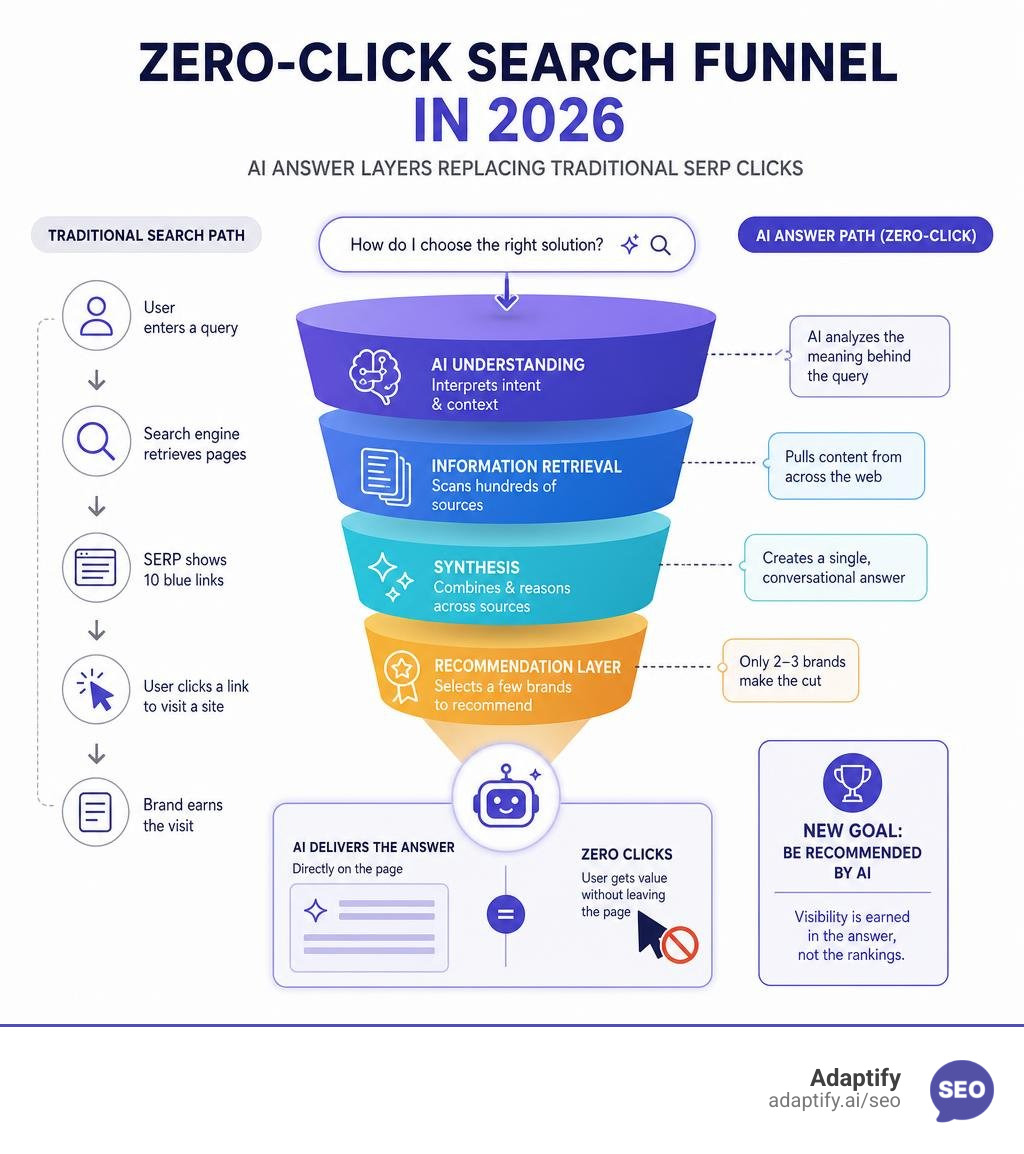
To understand why traditional tracking fails, we have to look under the hood of how Large Language Models (LLMs) operate. Traditional SEO is about indexing and retrieval; search engines crawl your site, rank it based on keywords and backlinks, and present a list of links.
Answer Engine Optimization (AEO) and Generative Engine Optimization (GEO) are different. Instead of retrieving links, AI systems synthesize information. They read hundreds of sources, extract the core entities, and build a conversational response. In this new landscape, machine trust is the ultimate currency.
If you want to understand the foundational concepts, my team's Beginners Guide to GEO AI SEO is a great place to start. The main takeaway is that you are no longer optimizing for human eyes first; you are optimizing for the AI's "understanding" of your brand. As I discussed in The AI Advantage Adapting Your SEO for the Generative Era, winning in this era requires structured authority.
For teams that prefer a hands-on, self-hosted approach, the open-source community has built some incredible resources. The odoochain/geo-aeo-tracker repository on GitHub is a fantastic local-first tool. It runs SRO (Search Result Optimization) analysis across six AI models simultaneously, checking for crucial machine-readability signals like your llms.txt file, Schema.org markup, and Bottom Line Up Front (BLUF) content structure.
When I audit a brand's presence in AI search, I look at three core metrics that traditional analytics packages completely ignore:
Understanding the difference between a simple brand mention and a structured citation is critical. An AI might mention your brand name in passing, but a citation means it has actively used your content as a trusted source. If you want to stop guessing, you should read our guide on how to Stop Guessing and Start Benchmarking Your AI Search Performance.
To improve these numbers, you need to focus on what we call "entity strength." I've laid out several actionable strategies in our resource on Expert Tips for Improving Your GEO Score.
One of the best dedicated tools for measuring these conversational dynamics is GEOflux. It uses browser-authentic data collection rather than simple API calls. This is a crucial distinction: APIs often return deterministic data, whereas consumer-facing AI interfaces are highly personalized and dynamic. GEOflux captures what real users actually see.
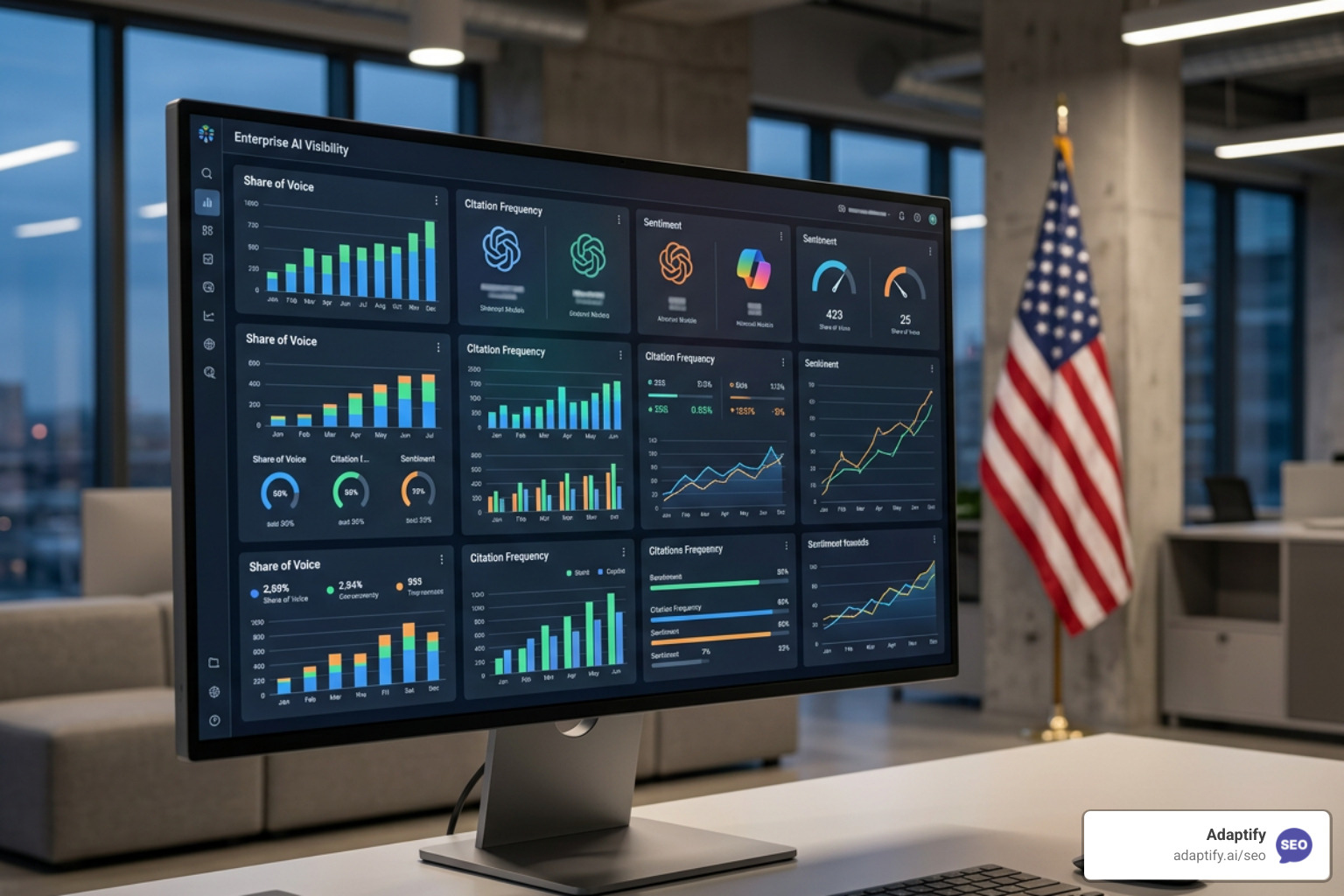
Selecting the right ai visibility tracking platforms for brands aeo geo tools requires evaluating how they handle multi-engine coverage. Your audience isn't just using ChatGPT. They are asking questions on Perplexity, Gemini, Claude, and Copilot. Enterprise-grade tools must cover all of these engines to prevent massive blind spots in your market intelligence.
For a deeper look at the software landscape, you can read The Best AI-Powered GEO SEO Platforms for 2026 and The Ultimate Guide to AI Visibility Tools for the 2025 US Market.
If you are running an eCommerce or consumer brand, the requirements are even more specific. You need a platform like the GEO/AEO Platform for eCommerce & Consumer Brands by Estran. Estran stands out because it doesn't just monitor visibility; it actively integrates with OpenAI's Agentic Commerce Protocol (ACP) and Google's Universal Commerce Protocol (UCP). This allows AI agents to read your structured product catalog, check live inventory, and complete transactions directly inside the chat interface.
For large organizations, security is not a nice-to-have feature — it is a strict gatekeeper. When you are feeding proprietary brand data, competitor lists, and target search queries into a platform, you must ensure that your data is protected.
This is why manual tracking or using unverified, cheap tools is highly risky. I wrote about this extensively in Professional Tools for GEO Why Manual Tracking Is a Losing Game. Enterprise platforms like Profound and Bluefish lead the market here because they offer:
Different business models require different toolsets. If you are a CMO at an enterprise brand, your priorities are high-level Share of Voice trends and risk mitigation. If you are an SEO manager at an agency, you need multi-client dashboards, automated reporting, and quick onboarding.
Here is how I rank the top platforms based on target workflows:
If you are an agency owner trying to figure out how to package these services for clients, check out our guide on Who Offers the Best AI Visibility in the GEO Agency World. And if you are looking to purchase optimization packages without getting burned, read How to Buy GEO Packages Without Getting Ghosted by AI.
To successfully implement a GEO strategy, your development and marketing teams must work in tandem. You cannot rely on manual spreadsheets to track conversational changes. You need automated, lightweight systems to capture and attribute AI-driven traffic.
A great developer-focused solution is the AI Visibility SDK. By adding their lightweight 12KB Web SDK to your site, you can detect referrers from ChatGPT, Claude, and Gemini with over 94% accuracy. Furthermore, it supports the Model Context Protocol (MCP), allowing AI assistants to query your brand's knowledge graphs directly.
One of the most immediate ways to win back market share in AI search is through citation gap analysis. This is the process of identifying queries where the AI recommends your competitors but leaves your brand out.
Most AI engines do not pull answers directly from your website; they synthesize answers based on what authoritative third-party sites say about you. To fix this, you must build what I call "machine trust."
I recommend reading my guide on How to Stop Being Invisible to ChatGPT and Gemini to learn how to structure your digital PR. Additionally, our deep dive on Beyond the Bots Mastering AI SEO for Tomorrows Search explains how to map semantic entities so that LLMs naturally connect your brand to your industry's core topics.
The ultimate question every CMO will ask is: How does this connect to our bottom line?
In the zero-click era, traditional metrics like Click-Through Rate (CTR) are dying. Instead, we must measure the "AI Moment of Truth" (AiMOT) — the exact point where a user trusts an AI's recommendation and makes a purchase decision.
At Adaptify, we help agencies and enterprises bridge this gap. Our automated SEO platform handles the heavy lifting of strategy formulation, high-quality content creation, and PR link building. By building consistent, highly authoritative content across the web, we feed the exact datasets that LLMs use to ground their answers.
If you want to integrate these insights into your business growth plan, check out The New Frontier Integrating AI and GEO for Business Growth. And for local brick-and-mortar operations, do not make the mistake of relying on outdated local tactics; read Local SEO Is Dead Long Live Geo Boosting Local Visibility in AI.
Ready to automate your authority and dominate the AI search landscape? Explore our Adaptify Pricing plans or book a live demo today to see how we can secure your brand's place in the future of search.
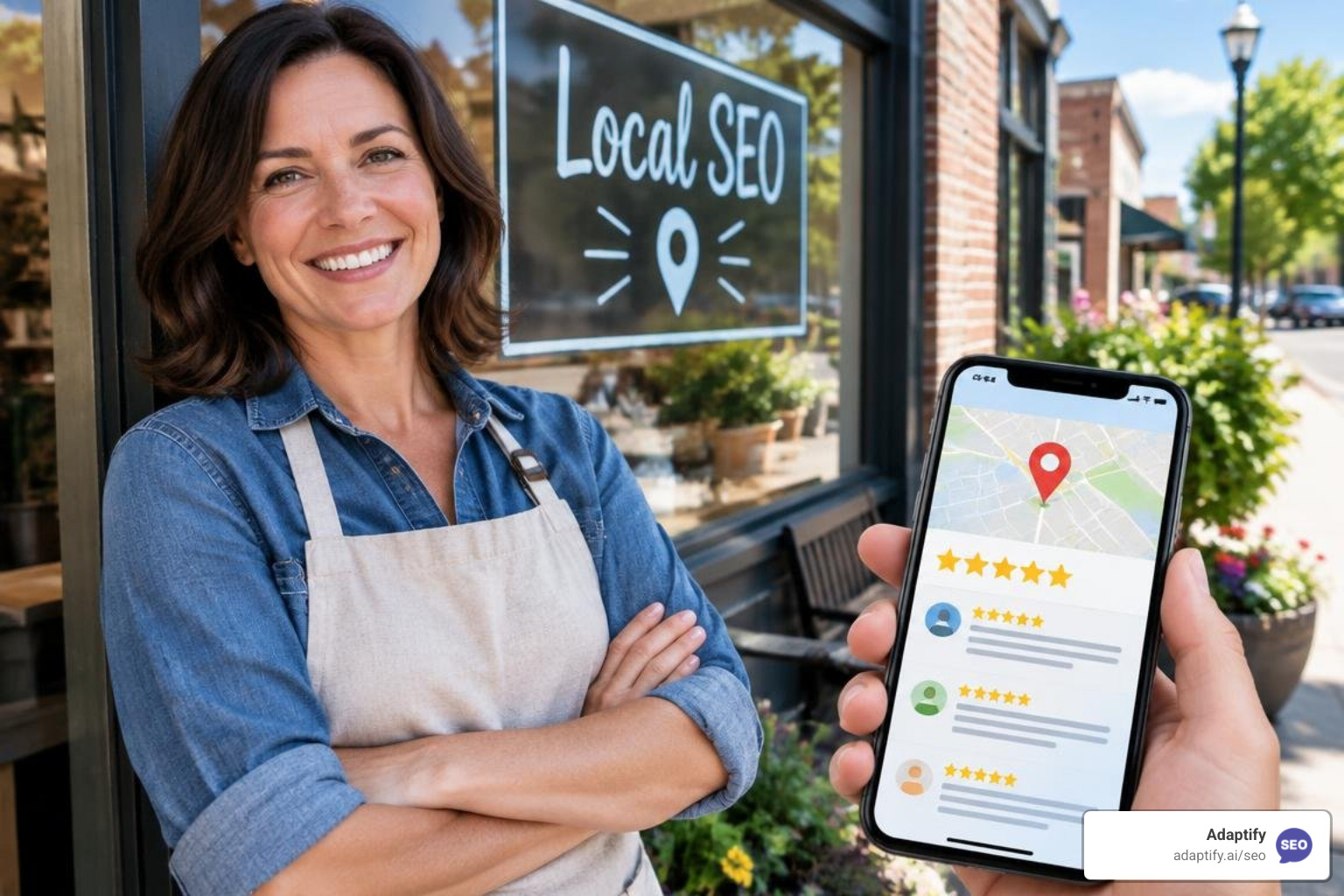
Stop being invisible: discover what the best local SEO strategies for small businesses are to dominate Google Maps, reviews, and AI search...
Master localized SEO to rank your local business in Google Maps and drive more in-store visits.
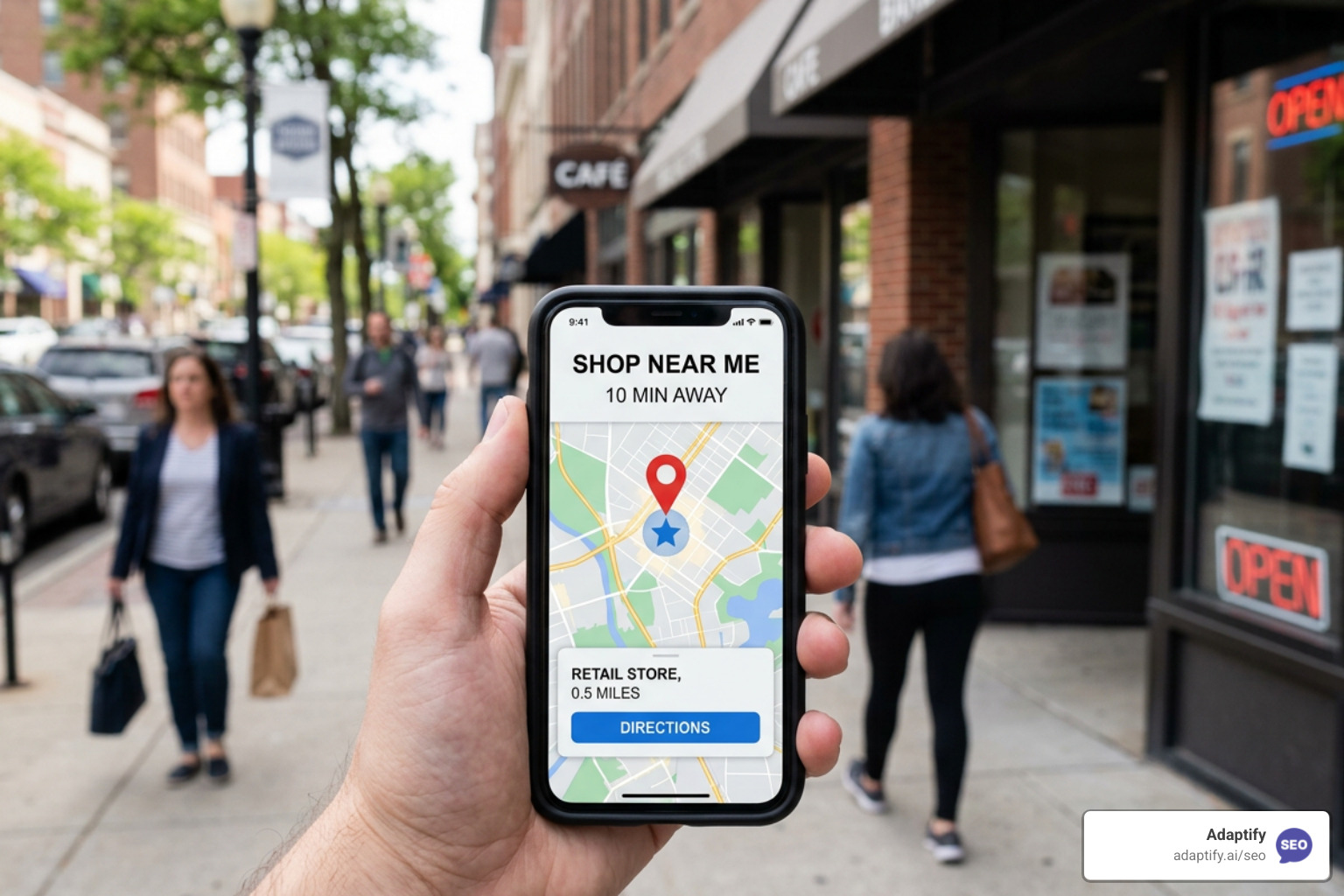
Master local retail SEO to drive foot traffic from Google with proven strategies for GBP, reviews, and AI search optimization.
Join 1,000+ agencies already delivering SEO and AI visibility from a single platform without increasing their headcount.Join 1,000+ agencies already delivering SEO and AI visibility from a single platform without increasing their headcount.