The Robot Writes: A Guide to Automated Article Creation and Beyond

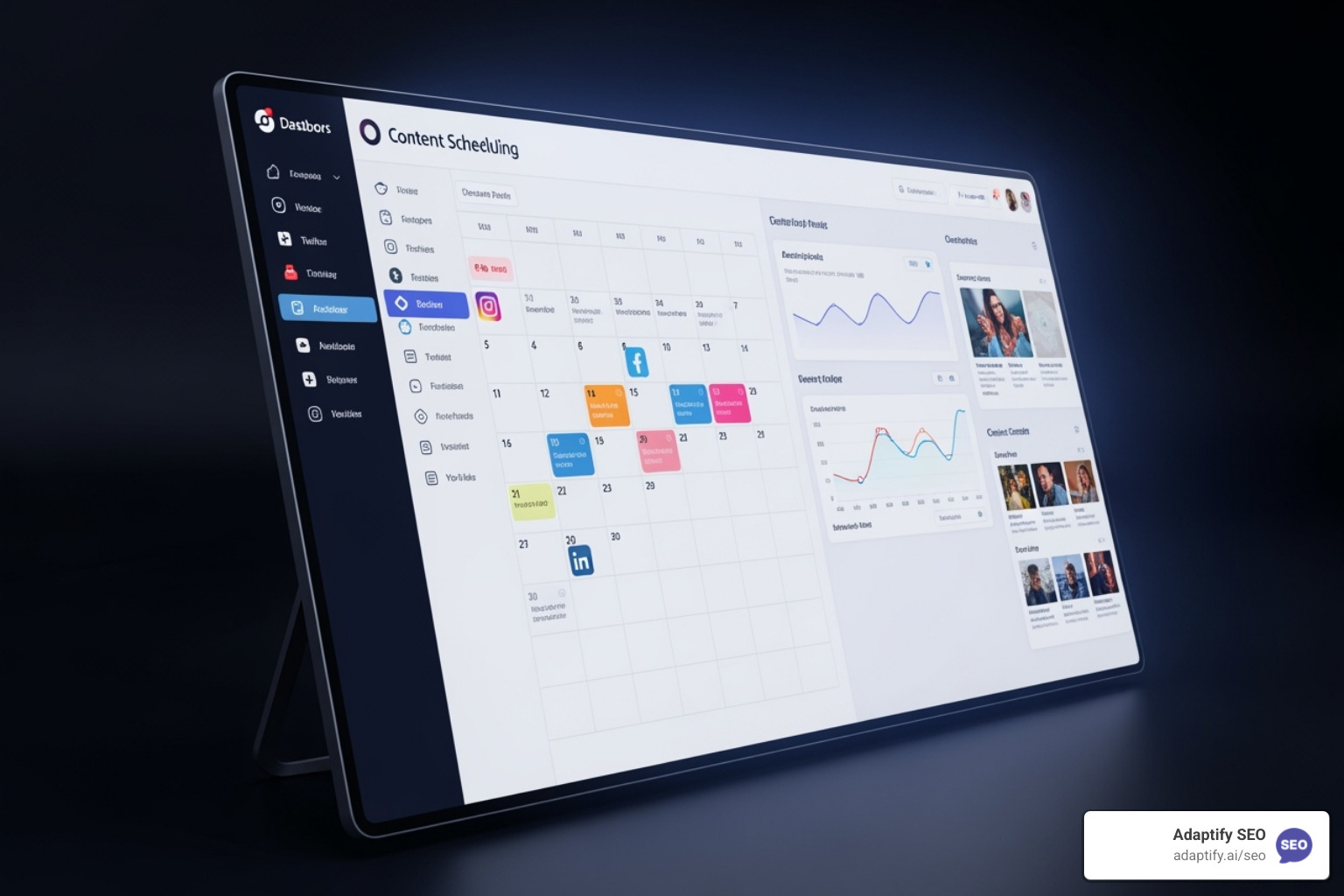

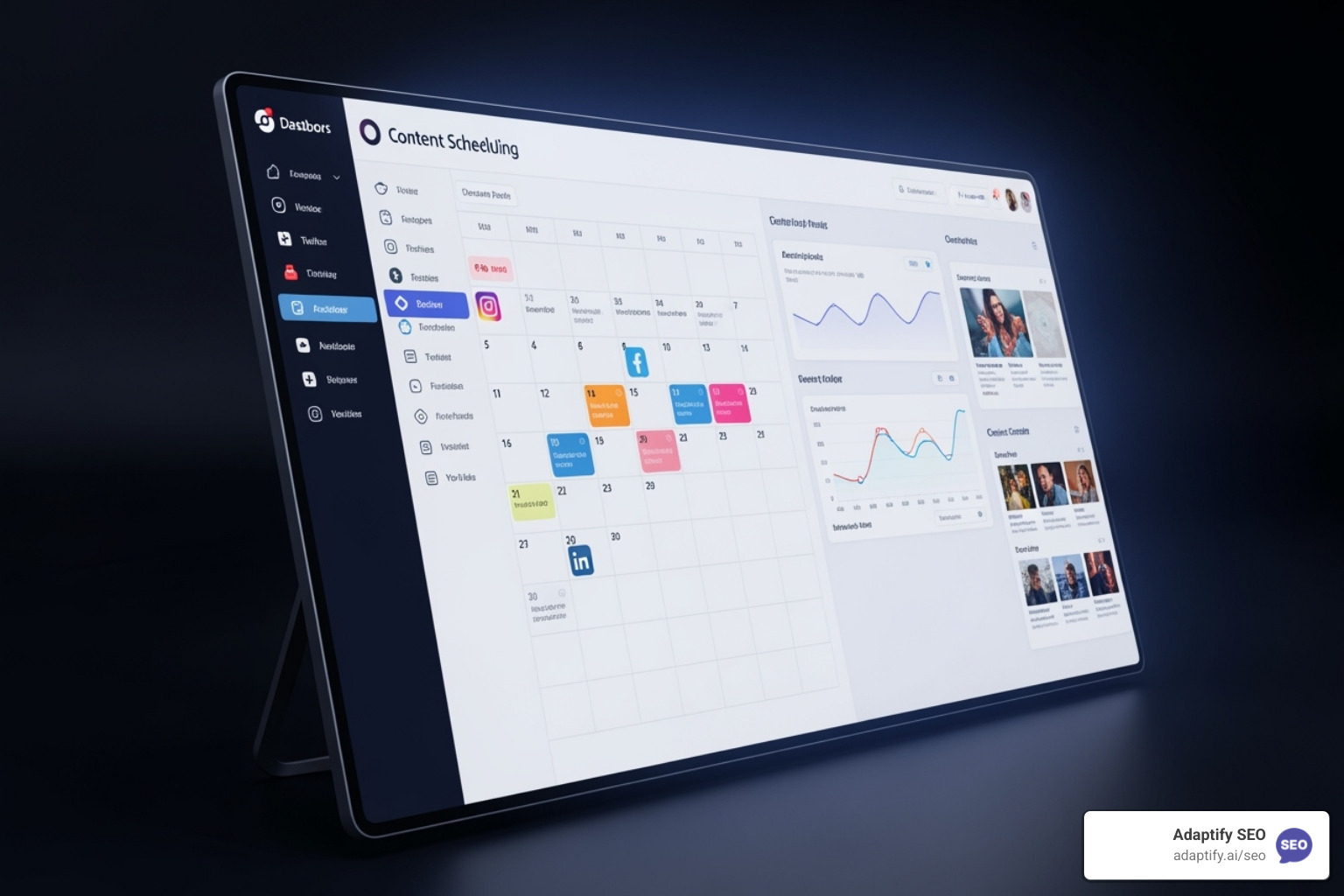
In today's hyper-competitive digital world, maintaining a consistent, engaging, and strategic online presence is not just an advantage; it's a fundamental requirement for survival and growth. The relentless demand for fresh content across a multitude of platforms can feel like a never-ending treadmill for marketing teams. This is where automated content scheduling—the process of using specialized tools to plan, organize, and publish social media posts and other content in advance—emerges as a cornerstone of effective digital marketing and a powerful ally for SEO success.
At its core, automation transforms content marketing from a reactive, often chaotic daily scramble into a proactive, streamlined, and strategic operation. It allows businesses, from solo entrepreneurs to large-scale agencies, to save a significant number of hours, maintain impeccable brand consistency across diverse platforms like LinkedIn, Instagram, X (formerly Twitter), and TikTok, and strategically engage audiences when they are most receptive. By scheduling content in advance, teams can reclaim precious time, shifting their focus from mundane logistical tasks to high-value activities like strategy development, creative thinking, and genuine community engagement. This ensures a steady, reliable stream of posts that builds audience trust and reinforces brand authority over time. As Annie Schiffmann from MeetEdgar aptly put it, "Before I found MeetEdgar, I felt like I was on a hamster wheel... This has been a huge game changer." This sentiment captures the profound operational shift that automation enables: a move from being a content machine to being a content strategist. This is no longer a mere convenience; it's an essential framework for scalable and sustainable growth.
I'm Hansjan Kamerling, and throughout my career, I've witnessed how the thoughtful implementation of automated systems can fundamentally transform a company's content operations and, by extension, its market position. At Adaptify.ai, we've been privileged to help numerous businesses scale from thousands to millions of users by leveraging the power of automation to streamline their marketing efforts, particularly in the complex domain of SEO. I'm here to share the principles and practices that can help you achieve the same transformative results. Adaptify.ai operates as a remote-first company with dedicated team hubs in the United States and the European Union. This global footprint enables us to provide round-the-clock support and strategic oversight for our clients across North America, Europe, and APAC. This means your content cadence never has to sleep, ensuring your brand remains active and relevant in every market you serve, no matter the time zone.
Consider a practical, high-stakes scenario: coordinating a multi-market product launch. Without automation, this is a logistical nightmare. Teams in different regions would be manually posting at what they hope are the right times, leading to inconsistencies, errors, and missed opportunities. With automated scheduling, the entire campaign can be pre-planned with military precision. You can create and schedule dozens of creative variations, handle localization for different languages and cultural contexts, and manage internal approval workflows across teams well in advance. Then, you can program the system to publish custom content to Instagram, LinkedIn, TikTok, and X at each specific region’s empirically determined peak engagement time. As the campaign rolls out flawlessly on schedule, your team is freed up to focus on what truly matters in the moment: managing live engagement, responding to customer inquiries, and amplifying the conversation, turning a stressful launch into a resounding success.
Imagine having a tireless, exceptionally organized digital assistant who never forgets to post your content, operates flawlessly across every time zone, and ensures your brand remains visible and active 24/7. That, in essence, is the powerful capability that automated content scheduling delivers to your marketing arsenal. It is the strategic planning and subsequent automated distribution of your digital content—from social media updates and blog promotions to videos and graphics—across a multitude of platforms. This technology transforms what is often a chaotic, time-consuming manual process into a streamlined, efficient, and predictable operation, laying the foundation for scalable digital growth.
Why does this matter so profoundly in today's marketing landscape? Because it facilitates a critical strategic shift from being reactive to proactive. Instead of waking up each day scrambling to find something to post, you can dedicate focused blocks of time to plan, create, and schedule weeks or even months of high-quality content in advance. This foresight ensures a consistent and professional brand presence, which is vital for building credibility and trust with your audience. The marketing expert Annie Schiffmann famously described the relief this brings, stating, "Before I found MeetEdgar, I felt like I was on a hamster wheel... This has been a huge game changer." This sense of control and strategic oversight is precisely what makes scheduling tools an indispensable component of the modern business toolkit.
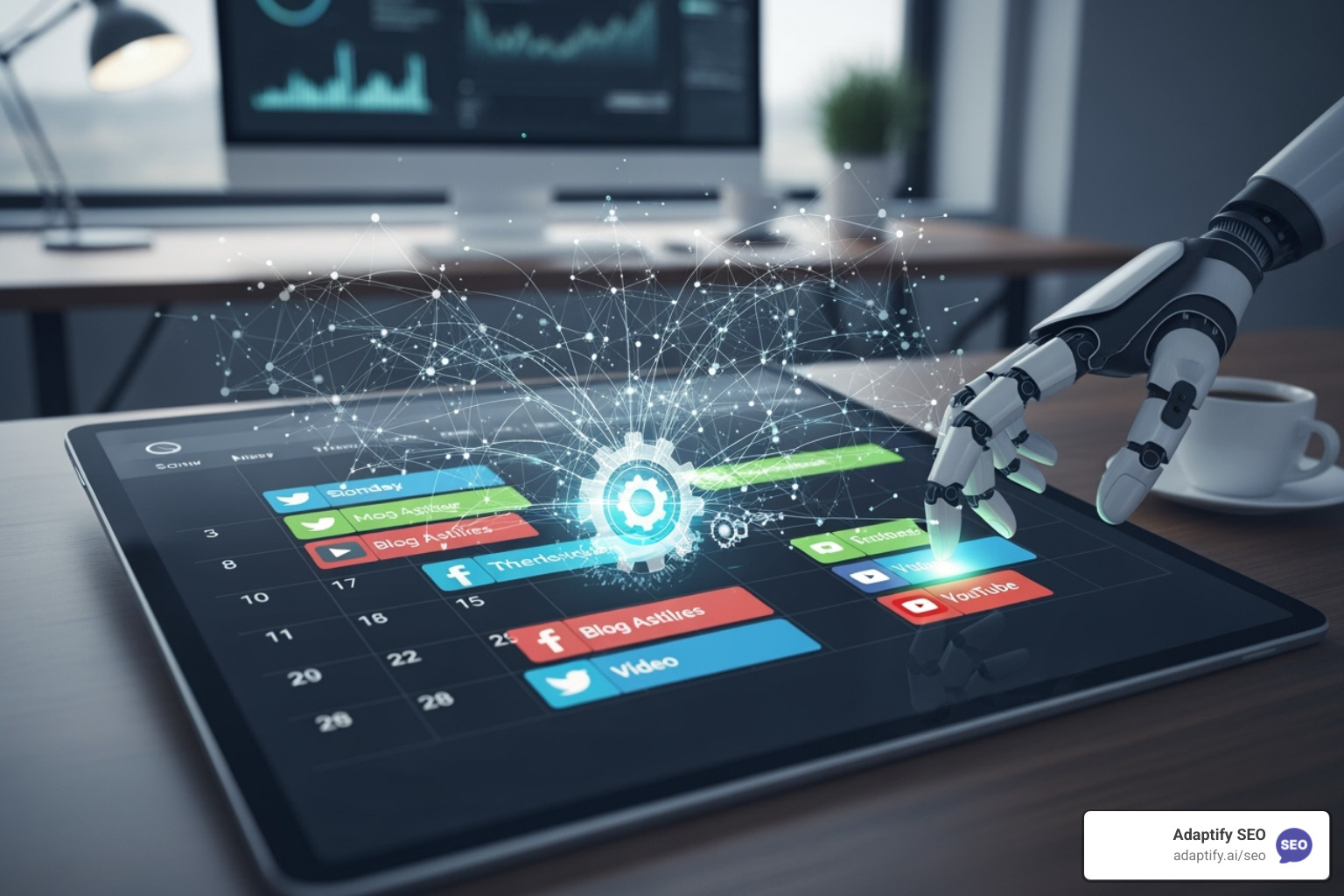
The advantages of integrating automated content scheduling into your workflow are not just incremental; they are transformative. The most immediate benefit is immense time efficiency. Teams can save anywhere from 5 to 15 hours per week, freeing up valuable human capital for strategy, customer interaction, and creative development. Secondly, it ensures a consistent brand voice and aesthetic across all platforms. By planning content in batches, you can maintain a cohesive narrative and visual identity, which is crucial for building a strong, recognizable brand. Thirdly, by analyzing performance data, these tools allow you to schedule posts for optimal times, dramatically increasing audience reach and engagement by connecting with users when they are most active, even if that's outside your own business hours or in different time zones. Finally, the built-in analytics provide a treasure trove of actionable data. This feedback loop allows you to move beyond guesswork, understand what resonates with your audience, and continuously refine your strategy for better results.
Modern scheduling tools have evolved far beyond simple post-timers; they are sophisticated, comprehensive social media management platforms. When evaluating options, look for these key features:
Selecting the right automated content scheduling tool is a critical decision that can significantly impact your marketing workflow's efficiency and effectiveness. The choice depends entirely on your unique circumstances, including your team size, budget, technical expertise, and strategic goals. A solopreneur managing a single brand has vastly different requirements than a large agency juggling dozens of client accounts. The key is to find the tool that best aligns with your specific workflow and objectives, not necessarily the one that boasts the longest list of features.
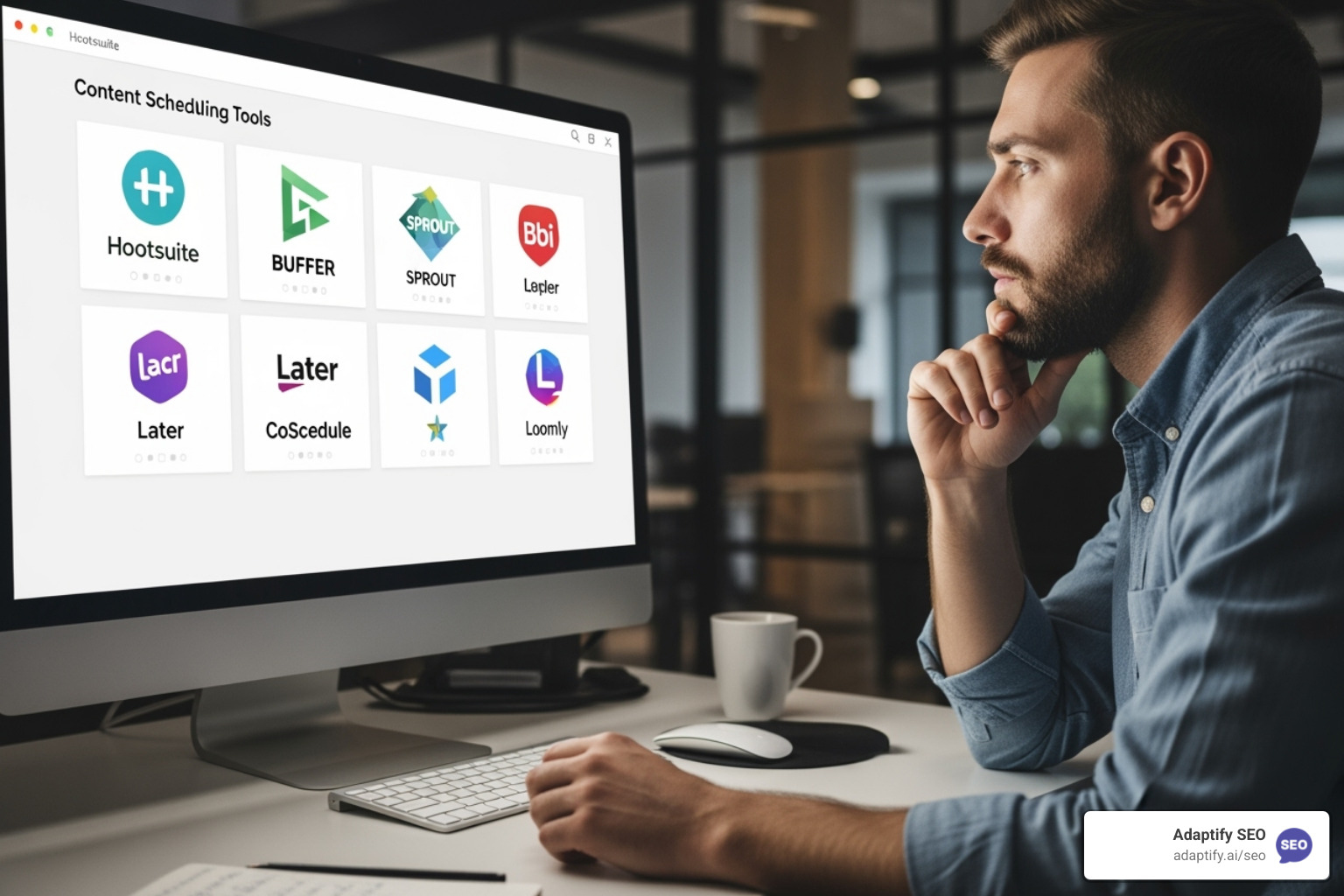
Before you start comparing platforms, conduct a thorough internal assessment of your current and future needs. Ask critical questions: How many social profiles do we need to manage now? How many will we need in a year? Do we require basic scheduling, or do we need advanced features like a unified social inbox, AI-powered content creation, deep analytics, and complex team approval workflows? Beyond features, carefully evaluate the tool's scalability, its user interface (UI) and user experience (UX), and the quality of its customer support. A powerful tool with a clunky, unintuitive interface or unresponsive support can quickly negate any potential time savings and become a source of frustration.
Here's a comparative look at some of the most popular and respected tools in the market, highlighting their strengths and ideal user profiles:
Acquiring a powerful scheduling tool is just the first step; open uping its true potential requires a thoughtful and disciplined strategy. The most successful social media programs combine the efficiency of smart planning with the authenticity of genuine human engagement. It's crucial to think of your scheduling tool not as an autopilot, but as an expert assistant that handles the complex logistics, freeing you and your team to focus on what truly matters: creating valuable, resonant content and building meaningful connections with your audience.

The landscape of automated content scheduling is in a state of constant and rapid evolution, propelled forward by significant advancements in artificial intelligence and a growing demand for more interconnected marketing technologies. We are moving decisively beyond the era of simple scheduling and entering a future defined by intelligent, predictive, and deeply integrated content ecosystems. The tools of tomorrow won't just execute commands; they will act as strategic partners.
Predictive analytics and hyper-personalization are at the forefront of this change. In the near future, these tools will not just suggest the best generic time to post; they will use machine learning to predict which specific content formats and topics individual segments of your audience want to see next. They will be ableto automatically tailor messaging, visuals, and calls-to-action for different user personas, creating a far more personalized and effective experience at scale. The AI assistants we see today, like SocialBee's Co-pilot, which help draft strategies and posts, are merely the beginning of this trend toward predictive content intelligence.
Deeper integrations are another critical pillar of the future. The modern scheduling platform is becoming a central hub within the broader marketing technology stack. The value is no longer just in publishing to social networks, but in connecting those activities with every other part of the business. Imagine a workflow where a positive comment on a social post automatically creates a lead in your CRM, a negative comment triggers a support ticket in your helpdesk software, and a surge in engagement for a product post initiates a targeted email campaign via your marketing automation platform. This creates a seamless, responsive, and highly efficient workflow where data and actions flow freely between systems.
As new social platforms and content formats emerge, the best scheduling tools will continue to adapt and integrate them. Agility is key. We've already seen top-tier tools quickly incorporate support for networks like Threads and Mastodon. Furthermore, as AI-generated content becomes more sophisticated and commonplace, adhering to quality standards is paramount. It's important to remember Google's stance on this: they reward high-quality, helpful content, regardless of how it's created. As Google's own search guidelines emphasize, the focus must be on content that demonstrates high levels of expertise, experience, authoritativeness, and trustworthiness (E-E-A-T). The future of content automation involves using AI to improve these E-E-A-T signals, not to fake them.
However, this advanced future is not without its challenges. The ethical considerations of AI, including the potential for bias, misinformation, and the erosion of authentic communication, must be carefully managed. The ultimate goal of this technology should not be to replace human creativity, strategy, and connection, but to augment and amplify them. As Andrea Bosoni wisely noted, "It's funny how everyone wants to use AI to write content but at the same time no one wants to read content written by AI." The future of marketing belongs to those who can masterfully blend the efficiency and power of automation with an authentic, empathetic, and strategic human touch.
At Adaptify.ai, we are firm believers that this integrated, AI-driven, and human-guided approach represents the future of all digital marketing. Just as we apply automation to explain and streamline the complexities of SEO, these advanced scheduling tools are revolutionizing social media management, enabling marketing teams to achieve greater efficiency, deeper insights, and more impactful business results.
As a consultant specializing in marketing automation, I've found that many of the same questions and concerns about automated content scheduling arise. Let's address some of the most common ones to clear up any misconceptions and provide clarity.
This is one of the most persistent myths in social media marketing. The definitive answer is no. Social media platforms like Instagram, Facebook, and LinkedIn do not algorithmically penalize content simply because it was published via a third-party scheduling tool. In fact, the opposite is often true. By using a scheduler to consistently publish content at optimal times—when your specific audience is most active online—you can significantly increase your reach and engagement compared to posting manually at random or inconvenient times. The quality of the content and the timing of its delivery are what matter, not the method of publishing.
While incredibly powerful, these tools are not without potential pitfalls, which are almost always related to strategy rather than the technology itself. The biggest drawback is fostering a "set it and forget it" mentality. If you schedule content for weeks in advance and then fail to actively engage with comments, messages, and real-time conversations, your brand can appear robotic and disconnected. Another consideration is the cost; while many tools offer free plans, the most advanced features required for larger teams or agencies come with a monthly subscription fee. Finally, an over-reliance on a rigid, pre-set schedule can cause you to miss out on timely, trending topics or breaking news, making your brand seem out of touch. A good strategy balances pre-scheduled content with real-time, spontaneous posting.
Yes, absolutely. For individuals, freelancers, or small businesses just starting out, there are many excellent tools that offer free-forever plans. Buffer, Later, SocialBee, and Metricool all provide robust free tiers that are perfect for getting started with automation. These plans typically come with certain limitations, such as the number of social accounts you can connect (e.g., up to 3), the number of users per account (usually just one), or the number of posts you can have scheduled in your queue at any one time (e.g., 10-30 posts). While limited, they are a fantastic way to learn the ropes and benefit from basic automation without any financial commitment.
Native schedulers (like Meta Business Suite for Facebook and Instagram) have improved, but they have one major limitation: they are siloed. You have to go into each platform separately to schedule content. A third-party tool provides a single, unified dashboard and content calendar for all your social networks. This allows you to plan your entire cross-platform strategy in one place, visualize how different channels interact, access consolidated analytics, and use powerful features like content libraries, AI assistants, and team collaboration workflows. For anyone managing more than one or two social profiles, a third-party tool offers a far more efficient and strategic workflow.
No, there is no technical footprint or label that indicates a post was published via a third-party tool. The posts appear completely native to the platform. The only way your audience might suspect automation is if your engagement strategy is lacking. If your feed is full of posts but your comments section is a ghost town with no replies from you, your presence will feel inauthentic. This is a failure of community management strategy, not a problem with the scheduling tool itself.
In the , always-on digital landscape of the 21st century, automated content scheduling has evolved from a niche convenience into a fundamental, non-negotiable component of any serious marketing strategy. By thoughtfully embracing these powerful tools, you and your team can reclaim invaluable time, maintain a consistent and professional brand voice across all channels, and strategically engage your audience for maximum visibility and impact. This is the new baseline for operational excellence in digital marketing.
We have moved far beyond the simple act of scheduling a post for a future time. We are now in an era of intelligent content automation, where platforms are infused with AI-powered features for content creation, deep analytics for strategic refinement, and seamless integrations that connect social media to the entire business ecosystem. These platforms empower modern marketers to work smarter, not harder, by handling the logistical burden. However, the ultimate key to success lies in remembering the purpose of this technology: it is here to augment and improve human creativity, strategic insight, and genuine connection, not to replace them. The most effective and resonant brands will always be those that masterfully combine the unparalleled efficiency of automation with the irreplaceable authenticity of the human touch.
At Adaptify.ai, we live and breathe this philosophy. We specialize in automating the entire SEO workflow—from data-driven strategy and high-quality content creation to authority-building link acquisition—freeing you to focus on the highest-level decisions that grow your business. From our strategic hubs in the US and EU, we partner with ambitious teams across all time zones to design, implement, and optimize these powerful systems from end to end.
Ready to transform your marketing operations? Let's explore what automation can do for you.
Book a Demo (https://adaptify.ai/seo)

Learn how an SEO automation system streamlines keyword research, content workflows, and reporting to scale your search operations efficien...

Discover what SEO tasks seo automation services can realistically automate for faster audits, keyword research, and content optimization.

Stop staring at blank pages. Use the best SEO article writing software to create optimized content that ranks in 2026.
Join 1,000+ agencies already delivering SEO and AI visibility from a single platform without increasing their headcount.Join 1,000+ agencies already delivering SEO and AI visibility from a single platform without increasing their headcount.