Hidden Labor Costs: Manual SEO vs Automated Platforms




To understand why manual SEO is so expensive, we first have to look at where the hours actually go. When I audit agency operations, I consistently find that SEO teams spend between 40% and 60% of their weekly capacity on repetitive, tactical tasks. These are highly skilled professionals who are paid to think strategically, yet they spend the majority of their days acting as data-entry clerks.
The most glaring time sinks usually begin with keyword research and clustering. In a manual workflow, this isn't just a matter of running a quick search. An SEO specialist must pull raw keyword lists from multiple sources, filter out irrelevant terms, manually categorize search intent, and group thousands of keywords into topical clusters. When done via spreadsheets, keyword clustering for a single comprehensive campaign can easily eat up 10 to 15 hours of manual sorting.
Once the keywords are grouped, the next bottleneck is content brief creation. To build a brief that actually helps a writer rank, a strategist must:
This process takes roughly 2 to 3 hours per brief. If you are trying to scale a blog and publish 20 articles a month, your team is wasting up to 60 hours just preparing the briefs before a single word is even written. If you want to dive deeper into how to break this cycle, you can read my guide on Beyond Manual: Unlocking Efficiency with Automated SEO Tasks or explore how to scale this specific part of your workflow in Beyond Manual: A Guide to Automating Blog Content for Scale.
Finally, there is the ongoing burden of competitor tracking. Manually checking competitor rankings, monitoring their content updates, and reverse-engineering their backlink profiles is a never-ending treadmill. Because search landscapes shift daily, teams often find themselves repeating these exact same steps week after week, leaving zero time for actual optimization.
The absolute worst offender in the manual SEO time tax is what I call "CSV hell"—the data export and reconciliation bottleneck.
On any given day, a manual SEO specialist has to log into Google Search Console, Google Analytics 4, and various standalone rank trackers just to understand how a site is performing. They export raw CSV files from each platform, open up a master spreadsheet, and begin the tedious process of manual data reconciliation.
This disconnected tool management can consume up to 50 hours each month in manual work for a mid-size agency. Specialists spend their time aligning dates, fixing broken VLOOKUP formulas, and manually building charts for client slide decks.
This is purely administrative work that adds zero strategic value. By transitioning to an automated reporting system, agencies can reclaim a full work day per client monthly. Instead of paying a senior strategist to copy and paste numbers between tabs, that time can be redirected toward analyzing the data and finding new growth opportunities.
While the direct hours spent on tasks are easy to see, the truly dangerous costs of manual SEO are the ones that don't show up on a timesheet. These are the cognitive and operational frictions that quietly erode your team's efficiency.
The first of these is the cognitive cost of context switching. When your team has to jump between five or six fragmented tools to complete a single task—moving from a keyword tool to a document editor, then to a project management board, then to Google Search Console, and finally to an email thread—their focus is shattered. Studies show that it takes an average of 23 minutes to refocus after a distraction or a hard context switch. This "toggle tax" means that even if a task only takes 10 minutes of active work, the actual lost productivity is much higher.
Furthermore, manual data entry is incredibly error-prone. Industry data shows that manual data entry costs companies an average of $28,500 per employee per year in lost productivity, error correction, and operational drag. When your team is manually handling thousands of keywords, meta tags, and URLs, mistakes are inevitable.
To see what happens when you try to solve this by stitching together disconnected AI tools instead of using a unified platform, you can read this highly transparent 30-day experiment: I Replaced My Entire SEO Workflow with AI Agents for 30 Days: Here Is the Brutal Truth . The author quickly realized that managing disconnected "agents" often creates a whole new set of hidden maintenance costs.
In technical SEO, the cost of human error can be catastrophic. When technical audits are conducted manually, it is incredibly easy to miss critical issues like broken redirects, indexation blocks, or JavaScript rendering errors.
The differences in accuracy between manual and automated workflows are stark:
Consider the cost of fixing broken schema markup or invalid tags. If an SEO specialist manually writes schema for 100 product pages, a single misplaced comma can invalidate the code, preventing Google from displaying rich snippets. Finding and fixing those errors manually takes hours of tedious debugging.
Even worse is the rework penalty and the resulting campaign delays. If a technical error or a delayed content launch pushes a campaign back by just two weeks, the financial impact is immediate. Data shows that a simple two-week campaign delay can reduce overall traffic acquisition by more than 30% over the course of a quarter.
The ultimate trap of manual SEO is the scalability ceiling. In a manual workflow, the relationship between your workload and your labor cost is strictly linear. If it takes your team 20 hours a month to manage the SEO for one website, managing 10 websites will require 200 hours.
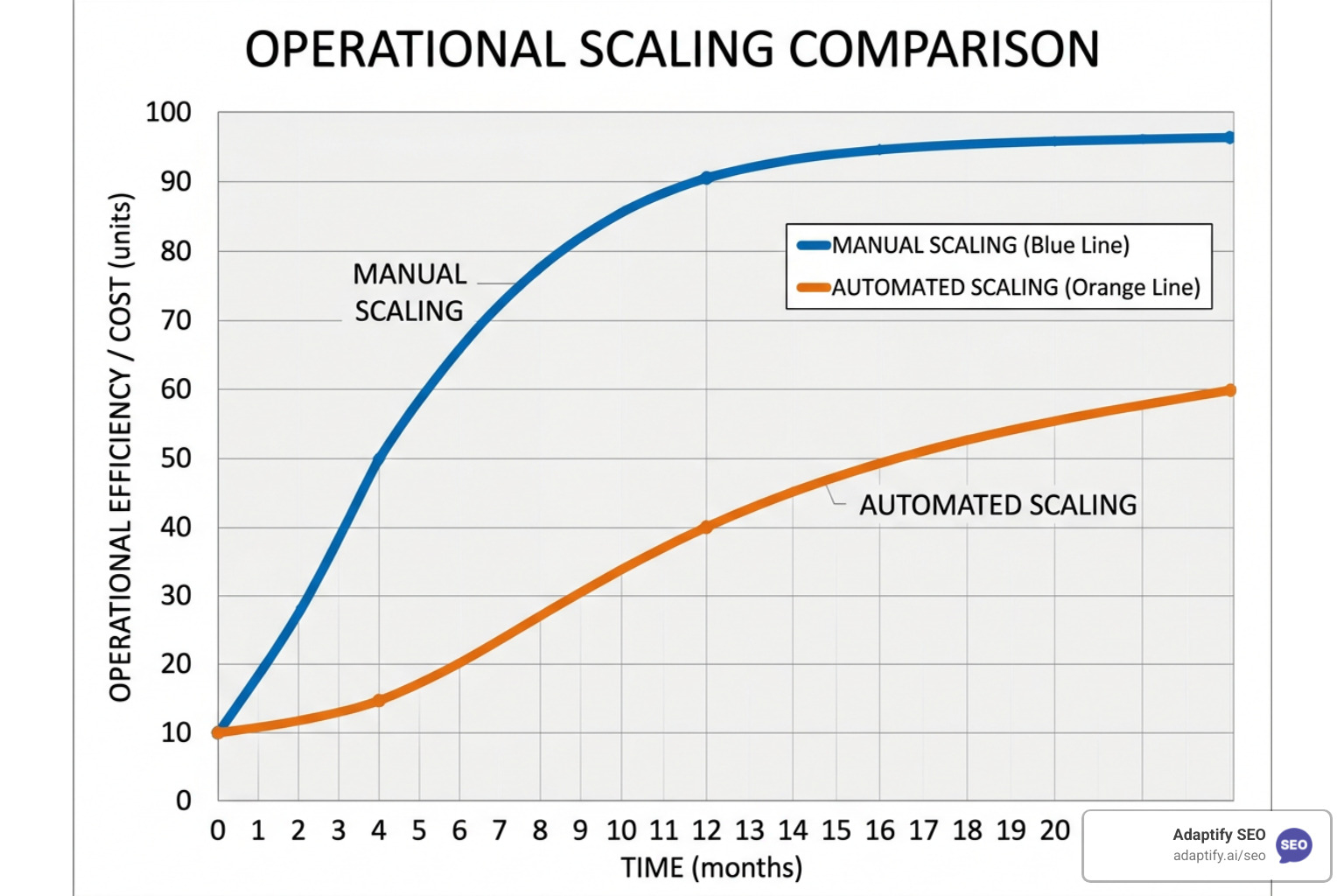
This linear relationship creates a structural bottleneck. As you scale the number of keywords, websites, or clients, your overhead compounds. You are forced to hire more people just to keep up with the basic administrative execution, which completely destroys your profit margins.
This bottleneck becomes even more severe when you factor in the complexity of the modern 2026 search landscape. SEO is no longer just about optimizing for Google's traditional blue links. Today, you must optimize for:
Managing all of these channels manually across multiple client accounts is physically impossible without a massive, expensive headcount. To understand how to scale past this ceiling, check out my thoughts on The Future is Now: Mastering Automated SEO for Better Results.
To make these hidden costs concrete, let's look at the actual financial numbers. The table below outlines a realistic comparison of manual SEO labor costs versus automated platform costs across different organizational scales in 2026.
| Team Size & Scale | Manual Weekly Hours Spent on Admin/Repetitive Tasks | Fully Loaded Annual Labor Cost Wasted on Admin | Monthly Automated Platform Cost (Avg) | Net Annual Savings with Automation |
|---|---|---|---|---|
| Small Team / Solo (1-3 clients or sites) | 15 – 20 hours | $39,000 – $52,000 | $150 – $350 | $37,000 – $48,000 |
| Mid-Size Agency (15-30 clients or sites) | 80 – 120 hours | $208,000 – $312,000 | $450 – $1,000 | $202,000 – $300,000 |
| Enterprise Team (100+ sites or markets) | 300+ hours | $780,000+ | $1,000 – $2,500 | $750,000+ |
When calculating the direct labor cost of manual SEO execution, you must look at the fully loaded cost of your talent. In 2026, the benchmark salary for a Senior SEO Manager is $137,016 annually (fully loaded with benefits, taxes, and overhead).
If that senior manager is spending 40% of their time on manual keyword clustering, building content briefs, and copying data into spreadsheets, you are effectively paying $54,806 a year for basic administrative work. The opportunity cost here is massive: every hour your highest-paid strategist spends on formatting a spreadsheet is an hour they aren't spending on high-level strategy, conversion rate optimization, or client retention.
For solo consultants and small teams, manual workflows are a growth killer. When you are running a solo consultancy, you have to balance client delivery with sales, marketing, and administrative tasks.
If you are bogged down by manual reporting and brief creation, your capacity is hard-capped at 3 to 5 clients. The moment you try to take on a 6th client, your delivery quality drops, or you run out of hours in the day.
Furthermore, small teams have no safety net. If a manual error slips through—such as accidentally leaving a noindex tag on a client's staging site when pushing it live—the financial risk is devastating. Losing just one major client due to an easily preventable manual mistake can wipe out a massive percentage of a solo consultant's annual revenue. To see how small teams can leverage automated content creation safely, read The Robot Writes: A Guide to Automated Article Creation and Beyond.
For mid-size agencies, labor is almost always the largest line item on the profit and loss statement, typically consuming 40% to 60% of total agency revenue.
When an agency relies on manual workflows, the time required to manage campaigns and generate monthly reports severely squeezes gross margins. I often see agencies pricing their retainers at $2,000 a month, only to realize they are spending 25 hours of manual labor on that client. At a fully loaded cost of $75/hour for their staff, that means they are barely breaking even on delivery.
This margin squeeze is particularly painful because of how client retention works. In the agency space, SEO clients typically stay much longer than PPC clients (the average SEO client tenure is 16 months compared to just 9 months for PPC). This is because organic search results compound over time, making the switching costs for the client incredibly high.
However, if your agency cannot deliver those compounding results efficiently because your team is drowning in manual execution, you will suffer from high churn. The cost of acquiring a new client is 5 to 7 times higher than retaining an existing one, meaning manual inefficiencies directly suppress your agency’s long-term valuation. To learn how to protect your margins, take a look at Future-Proof Your Agency: A Guide to AI-Powered SEO.
At the enterprise level, the challenges of manual SEO shift from simple margin calculations to complex organizational drag. Enterprise teams are tasked with managing thousands of product pages across multiple languages, regions, and domains.
Trying to coordinate this manually across separate content, development, and marketing teams creates extreme friction. It leads to severe team burnout and high turnover. Highly skilled SEO professionals do not want to spend their careers manually checking redirect chains or copy-pasting meta descriptions across 10,000 e-commerce URLs.
When those employees inevitably leave due to burnout, the replacement costs are incredibly high. The cost of replacing an experienced enterprise SEO professional—factoring in recruitment fees, onboarding time, and the loss of institutional knowledge—frequently surpasses 150% of their annual salary.
When businesses look at the pricing pages of modern SEO automation platforms, they often experience immediate sticker shock. A comprehensive, modern SEO automation setup can easily approach $450 to $1,000 per month in software costs.
But looking at software costs in isolation is a fundamental financial mistake. You have to compare that subscription fee against the actual labor hours you recover.
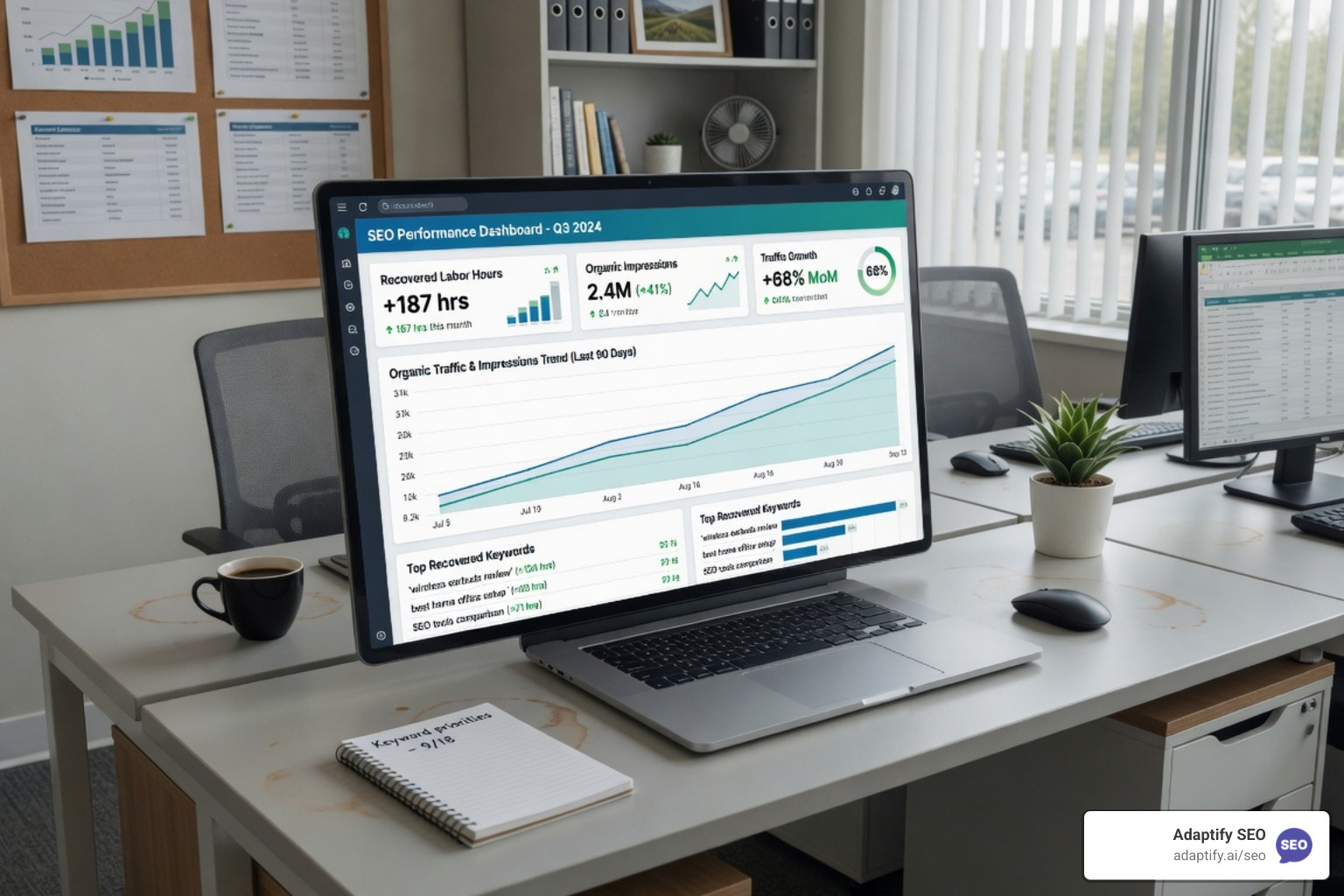
When you run the math, the ROI of automation is undeniable:
If you are paying $450 a month ($5,400 a year) for an automation platform, but that platform saves just one of your $80,000/year specialists 15 hours a week, you are recovering roughly $30,000 in lost labor capacity. That is a 5.5x direct return on your software investment, even before you factor in the revenue generated by faster campaign execution and improved rankings. To explore this dynamic further, read my article on AI-Powered SEO: Automate Your Way to the Top.
This is exactly why we built Adaptify SEO (Adaptify.ai). We realized that the traditional SEO model was completely broken. Agencies were spending thousands of dollars on disconnected tools that provided data but required endless manual labor to execute.
Adaptify SEO changes this dynamic by acting as a unified, automated SEO engine designed specifically for agencies. Instead of forcing your team to manually research keywords, write content briefs, draft articles, and hunt for backlink opportunities, Adaptify automates the entire execution pipeline:
By transitioning from disconnected tools to a unified platform, you turn your team's workflow from a series of manual bottlenecks into a streamlined operation. You can think of it as Your SEO Command Center: Mastering Tasks with a Management Platform. It allows you to scale your content output and backlink acquisition infinitely, without ever needing to scale your headcount. To learn how to master these automated workflows, check out Automate Your Way to the Top: Mastering AI for SEO Success.
When I speak with agency owners and marketing directors about making the switch to automation, they usually have a few very reasonable concerns. Here are the questions I hear most frequently in 2026.
A realistic transition to an automated SEO platform will yield immediate, measurable time savings across every major task category.
According to industry data, 15.6% of teams save 10+ hours weekly simply by automating their routine SEO tasks. When you look at specific workflows, the time savings are even more dramatic:
To get a complete breakdown of how these hours are recovered, read my guide on Beyond Manual: What is SEO Automation and How Can it Help You.
The hidden costs that businesses consistently fail to track include:
This is the most common fear, and in 2026, the data has thoroughly debunked it. Google's search quality evaluator guidelines explicitly state that content is evaluated based on its quality, helpfulness, and accuracy, regardless of how it was produced. Google does not penalize AI-generated content; it penalizes low-quality, unoriginal content.
In fact, 67% of marketers report better content quality when using AI-powered tools for research and structuring while keeping a human in the loop for editing and brand alignment.
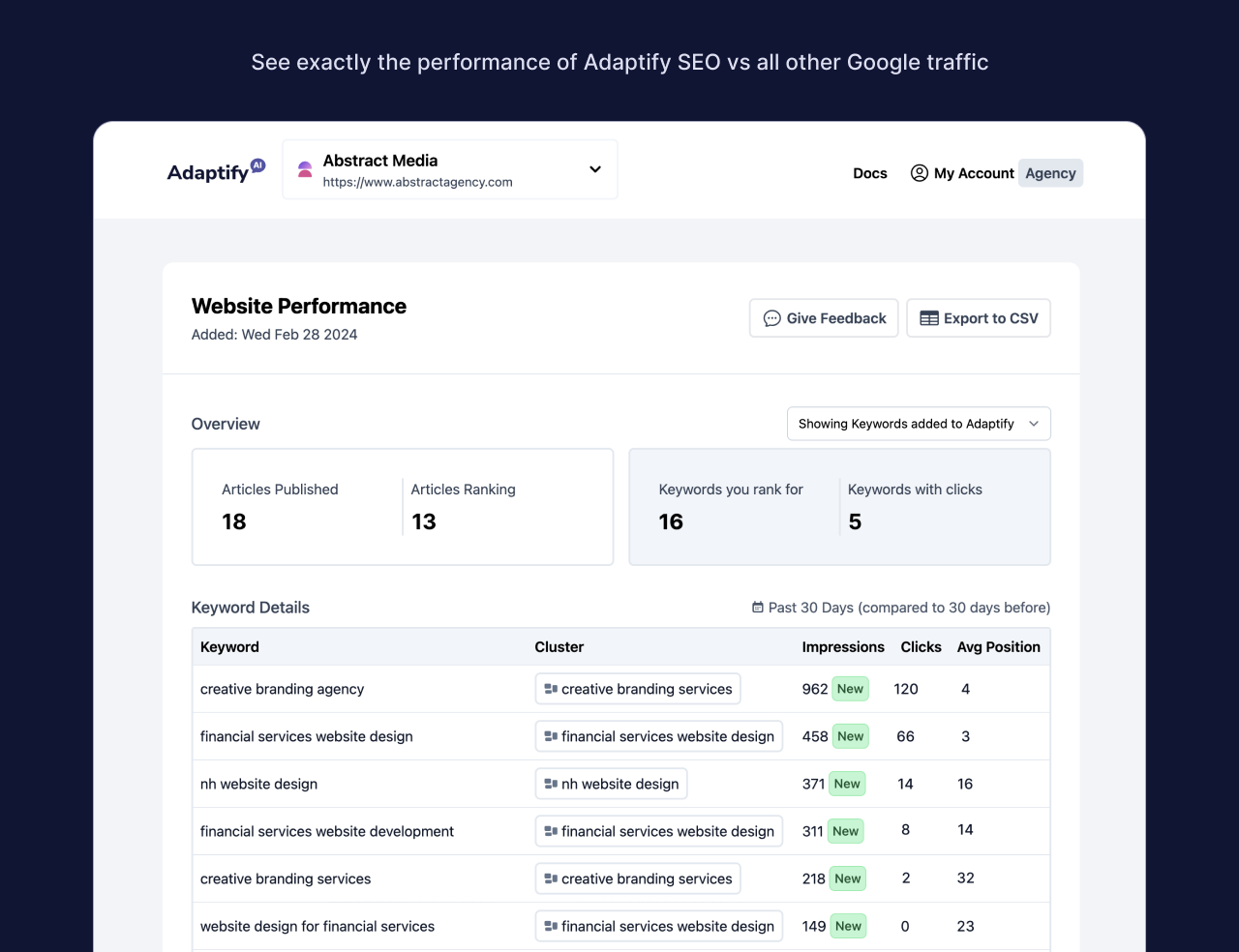
Furthermore, automation actually accelerates your results. Because automated systems can identify opportunities and publish content much faster than manual teams, businesses that adopt SEO automation often see measurable increases in organic impressions within just two months of implementation. To learn how to balance AI efficiency with high-quality content, read Write Smarter Not Harder: Unlocking the Power of AI for SEO Content.
If you are ready to stop bleeding resources on manual SEO and start scaling your agency's margins, you need a clear, structured plan to transition to automation. You cannot simply turn off your manual processes overnight; you must phase them out systematically.
Here is the exact framework I recommend:
If you are ready to scale your agency's margins, eliminate administrative overhead, and deliver compounding organic growth for your clients in 2026, explore the Adaptify SEO Platform and check out our transparent Adaptify SEO Pricing to find the perfect fit for your team.
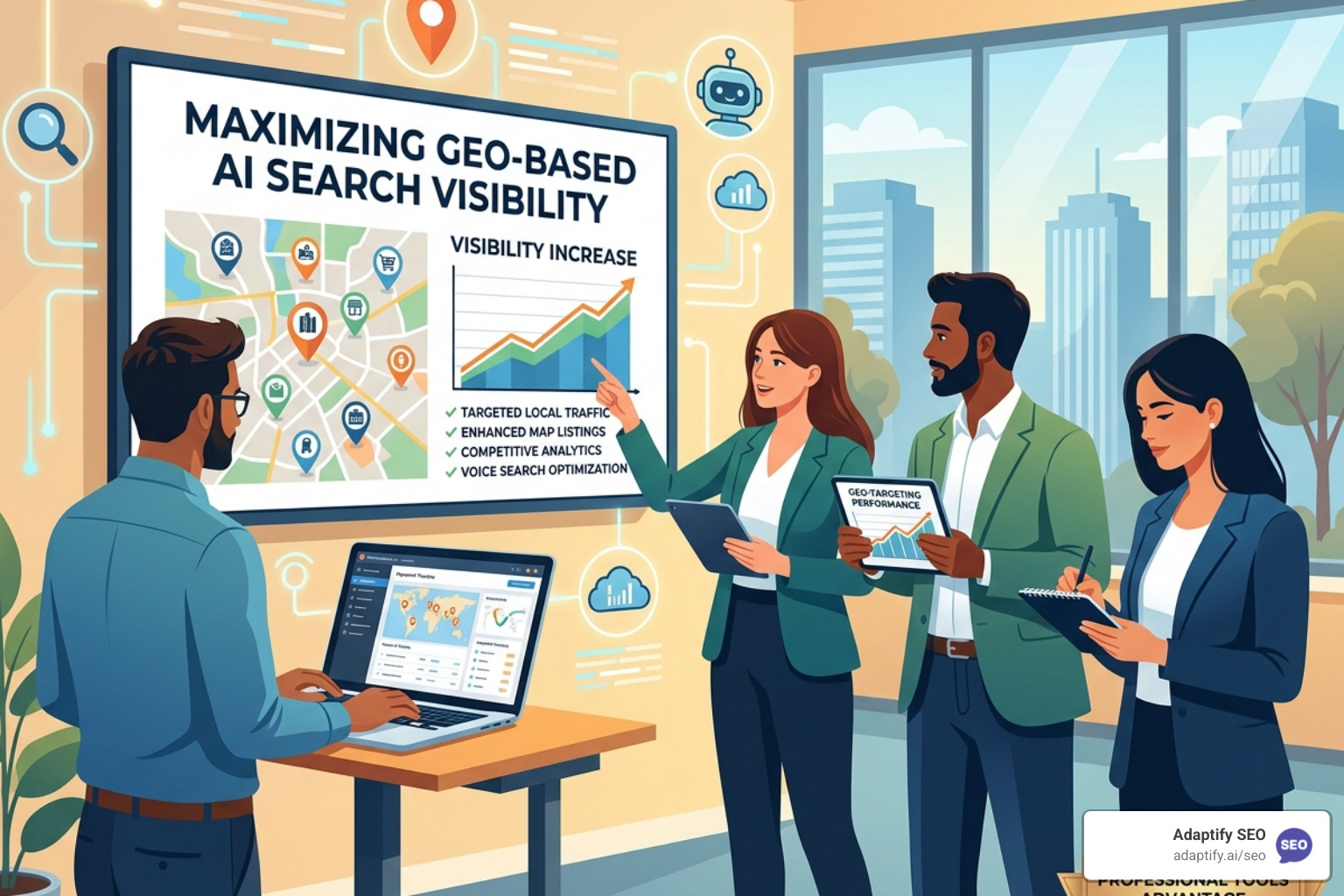
Discover benefits of professional tools for geo-based ai search visibility. Automate tracking, boost citations & outpace manual efforts in...

Master SEO business development to win clients, close deals, and scale your agency with proven strategies and AI-powered tactics.
Discover B2B SEO services for sustainable growth. Master strategies, ROI measurement, and AI shifts to generate qualified leads from searc...
Join 1,000+ agencies already delivering SEO and AI visibility from a single platform without increasing their headcount.Join 1,000+ agencies already delivering SEO and AI visibility from a single platform without increasing their headcount.