How to Choose an Effective Link Building Service Without Buying Spam




An effective link building service earns relevant links from real publications and shows where each link came from. For a full SEO program, choose an agency that pairs link building with content and reporting. Choose a digital PR firm for media coverage, a content marketing partner for link-worthy guides and research, or an outreach specialist for targeted publisher pitches. Avoid providers that promise a set number of high-authority links without showing their methods.
The best choice depends on your goals, budget, and capacity to create content worth linking to. Compare providers on publisher relevance, editorial standards, reporting, and results such as qualified traffic and leads—not link counts alone.
Luke Heinecke is Adaptify's Chief Revenue Officer and has more than nine years of experience in marketing and agency operations, including founding and exiting a performance marketing agency. His work helping agencies scale SEO informs this guide to choosing an effective link building service.
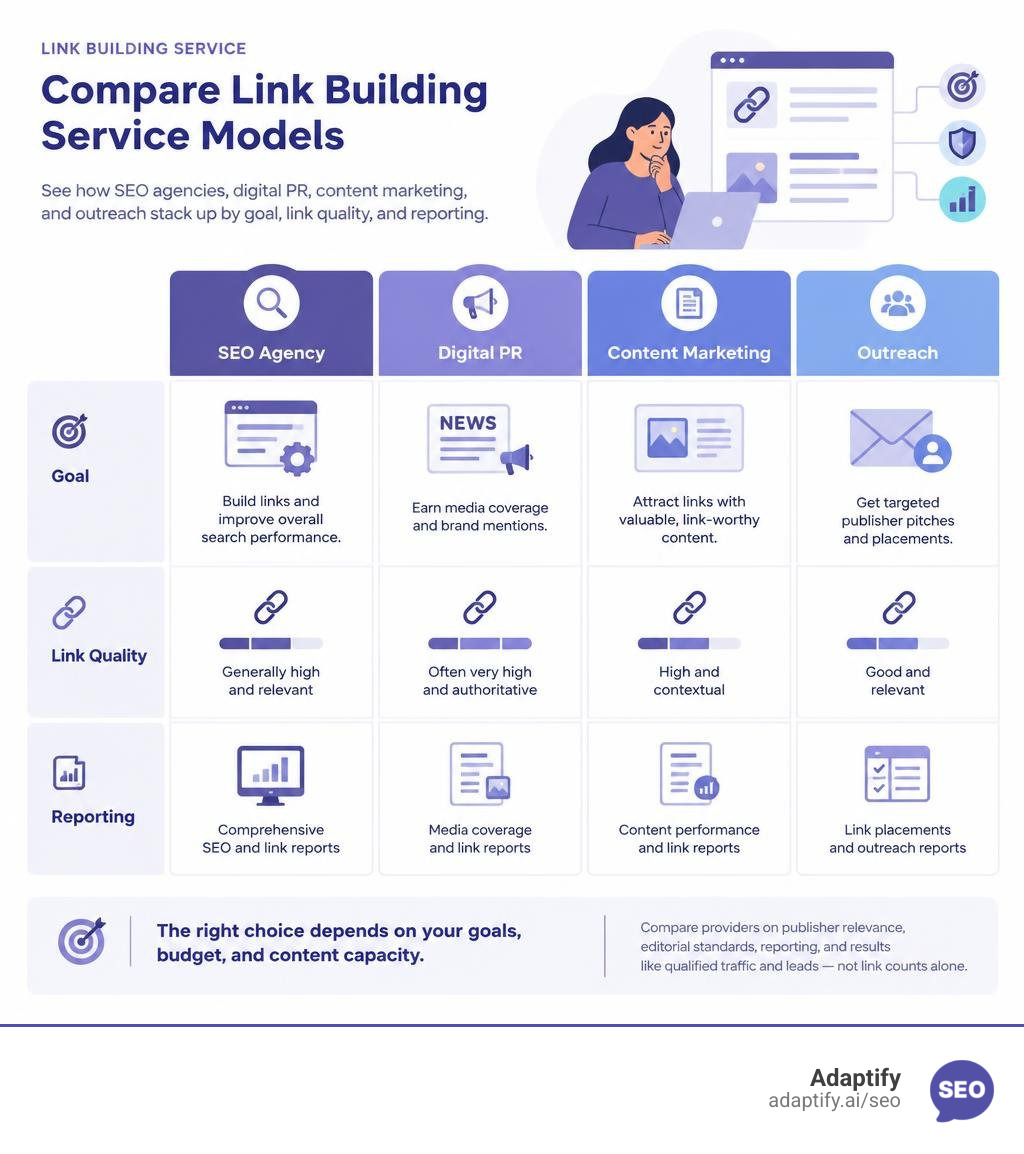
| Provider type | Strengths | Best fit | Common pricing | Trade-offs |
|---|---|---|---|---|
| SEO agency | Can align link building with technical SEO, content, and reporting | Businesses seeking broader SEO support | Monthly retainer, often bundled | Link-building scope and quality can vary; clarify deliverables |
| Content marketing agency | Produces guides, studies, and other assets that can attract links | Teams needing link-worthy content | Monthly retainer or project fee | Content does not guarantee coverage or links |
| Digital PR firm | Pitches newsworthy stories and expert commentary to media | Brands seeking coverage and awareness | Commonly $2,000-$15,000 per month for small businesses | Media mentions are not guaranteed to include links |
| Blogger outreach service | Handles prospect research and targeted publisher pitches | Teams with useful pages ready to promote | Often around $200 per quality link | Results depend on publisher relevance and outreach standards |
| Link marketplace | Offers a more productized ordering process and defined link options | Teams seeking a managed, predictable workflow | Usually per link | Metrics and guarantees do not replace careful quality checks |
| In-house team | Builds direct knowledge of the brand and relationships over time | Organizations with staff, expertise, and steady campaign needs | Salaries and operating costs | Requires time, tools, content, and ongoing management |

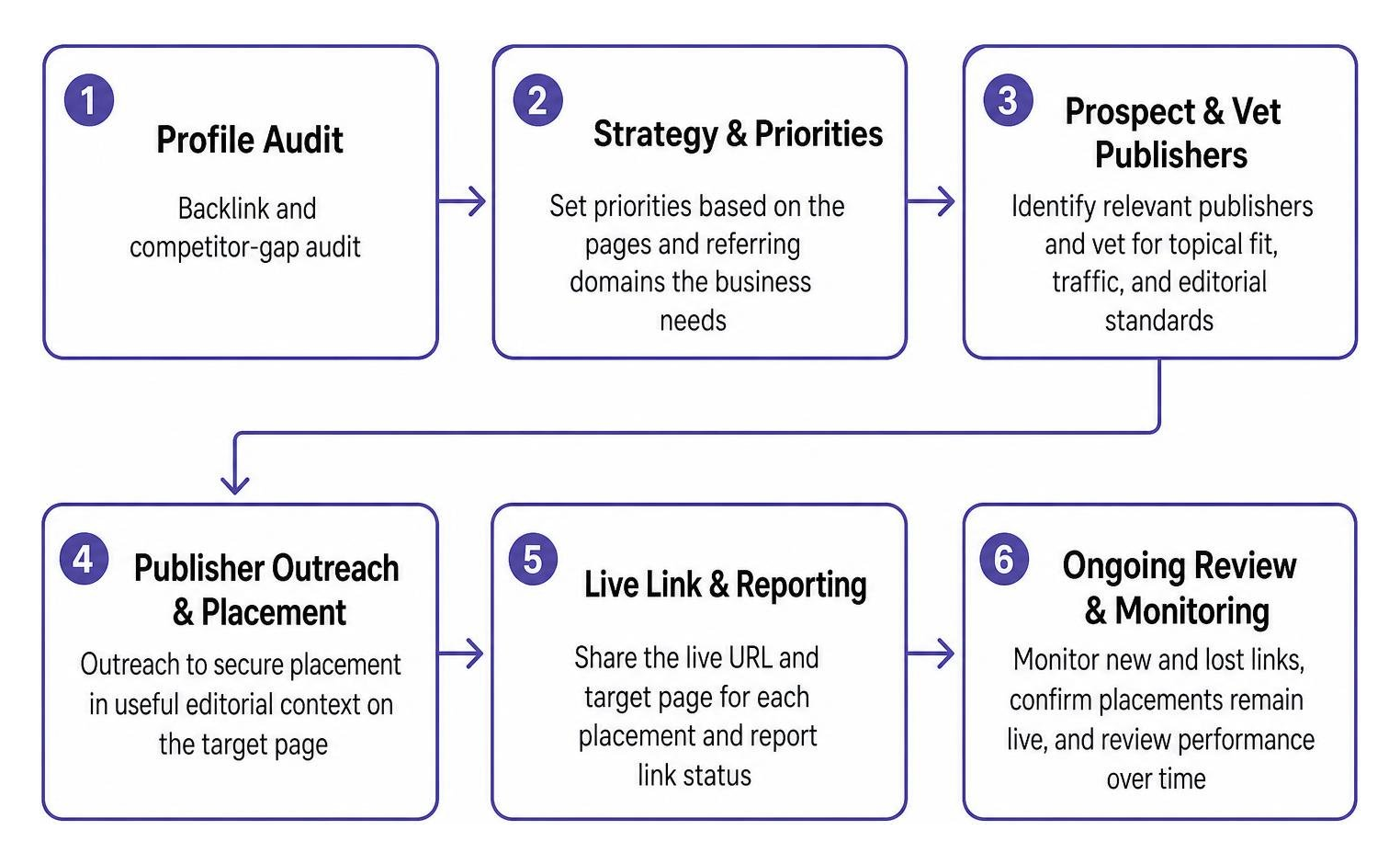
Expect a clear strategy, relevant publisher prospects, and links placed in useful editorial context. The provider should explain how publishers are selected, share the live URL and target page for each placement, and report the link’s status. Ask about timelines, link removals, replacement terms, and what happens if a placement never goes live.
A guarantee of rankings is not a substitute for transparent work. A reputable provider can explain its process and risks, but cannot control search algorithms or promise specific ranking outcomes.
Choose a full-service SEO agency when link acquisition needs to work alongside technical fixes, content, and reporting. A content marketing partner is a stronger fit when the site lacks assets worth citing. Digital PR is useful for original research, timely stories, and expert commentary; targeted outreach can suit a focused campaign promoting existing pages.
For agency scalability, evaluate whether the provider can explain its workflow, quality controls, and reporting—not just how many placements it can deliver. Industry familiarity can help with publisher relevance, but should be demonstrated with examples and a clear vetting process.
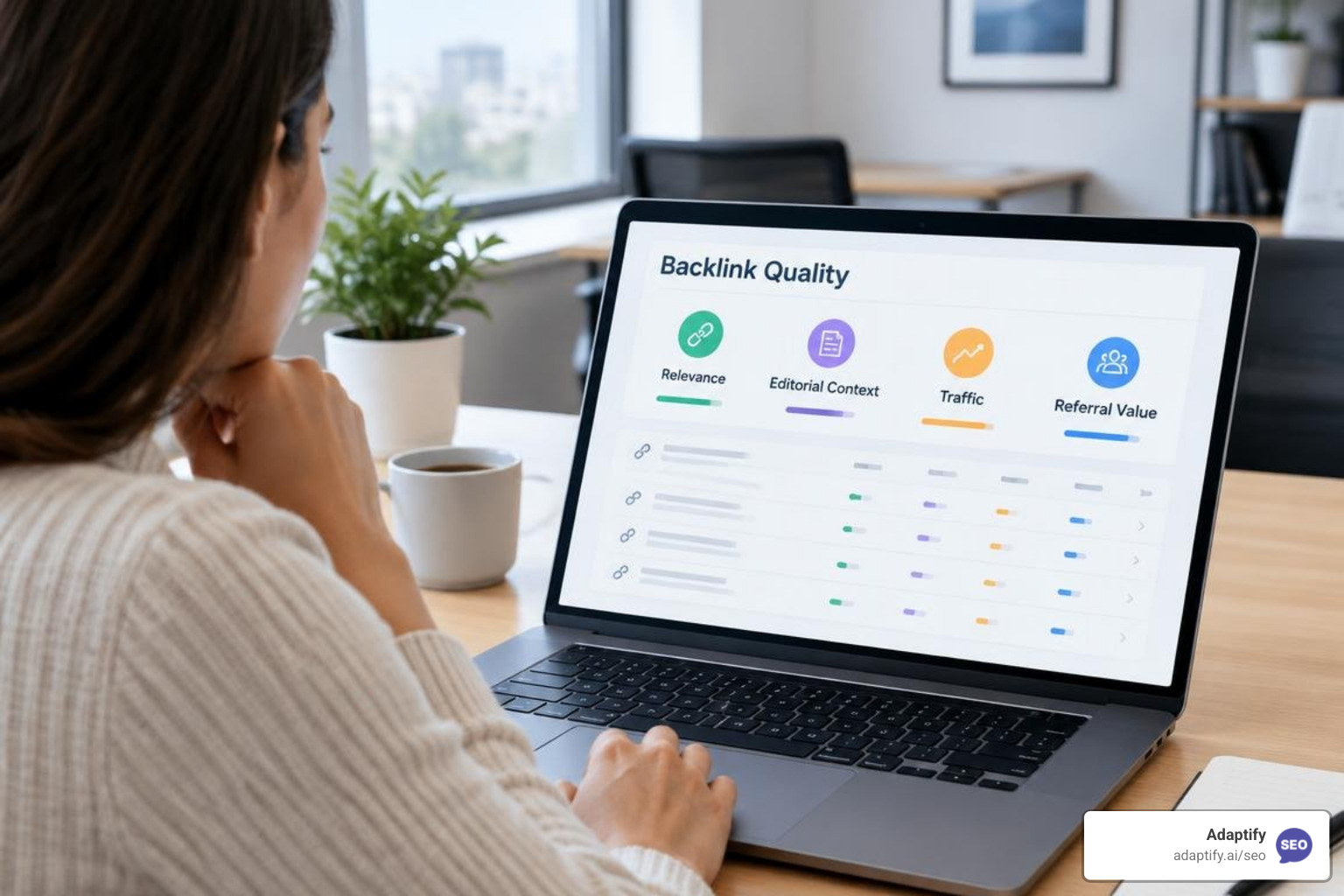
A high domain score alone does not establish link quality. Assess the publisher’s topical fit, organic traffic, editorial standards, and the specific page where the link will appear. A contextual citation on a relevant page can be more useful than a prominent metric on an unrelated site. Consider whether the placement could send referral visitors, too.
Use a consistent backlink quality framework to assess opportunities. Ask to review sample placements before committing, and check whether the site publishes useful content for a real audience.
A sound campaign starts with a backlink and competitor-gap audit, then sets priorities based on the pages and referring domains the business needs. It should build links at a pace that fits the site’s existing profile and opportunities, rather than chase a fixed monthly quota.
Look for varied, natural anchor text and relevant, in-content placements across different referring domains. Monitor new and lost links over time; backlink monitoring helps reveal whether placements remain live and whether the campaign is building a balanced profile.
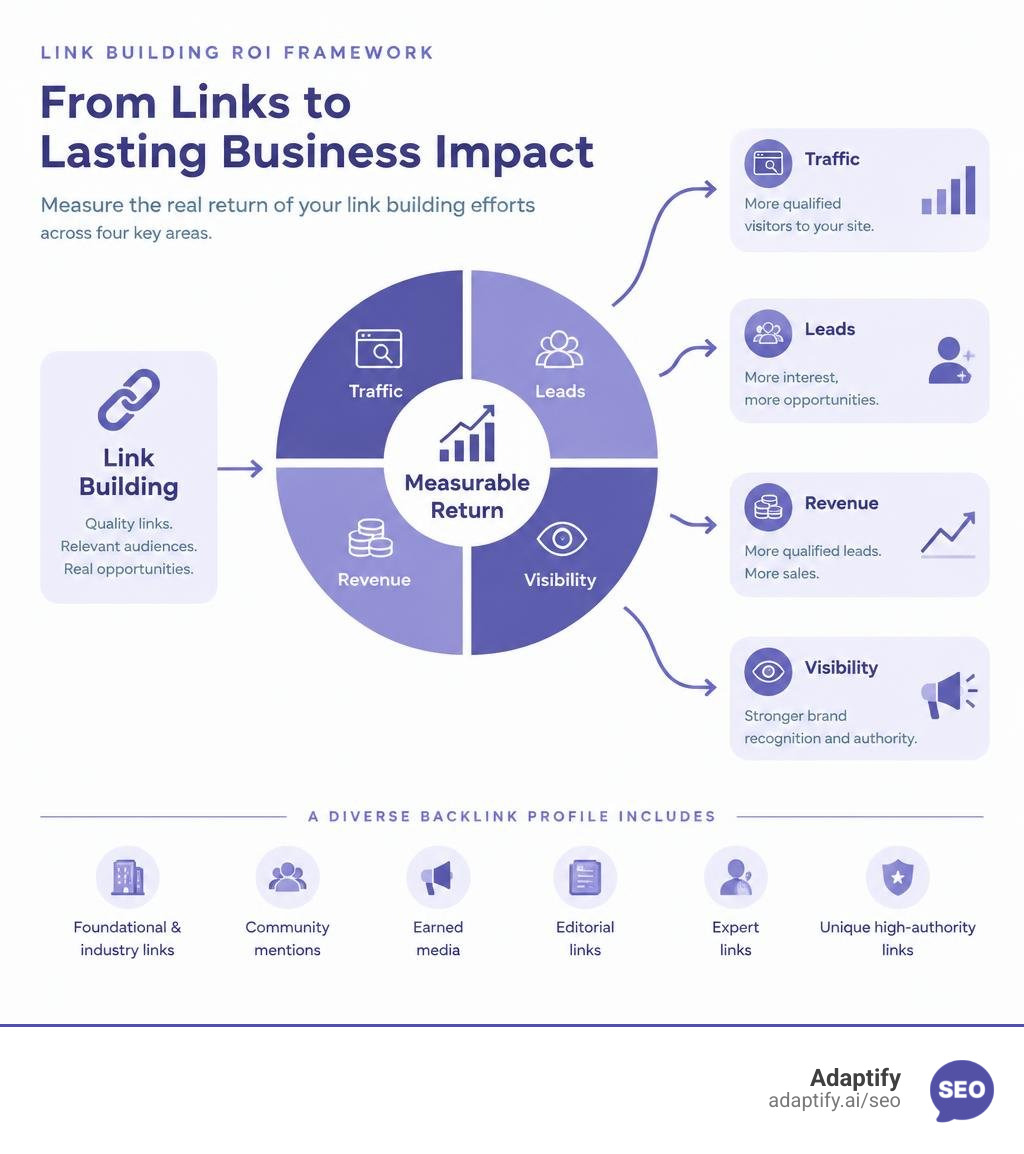
A resilient profile draws on several kinds of references, rather than relying on guest articles alone:
Diversity matters because each link type contributes a different context and audience. A profile built almost entirely from one placement format can look unnatural and may fail to build broad brand associations.
Avoid private blog networks, link farms, mass comment spam, automated directory blasts, and schemes that sell large volumes of followed links. These tactics can waste budget and expose a site to search-engine action. Press releases may support communications, but distribution links are not a dependable shortcut to rankings. Negative SEO—such as attempts to harm another site with spam links—is not a legitimate service.
Google’s link spam policies explain how manipulative link practices can violate its guidelines. Before hiring, ask how sites are found, whether placements are disclosed for review, and how the provider handles paid or sponsored links. Be cautious of guaranteed rankings, hidden publisher networks, and refusal to share live placement URLs. For a practical contrast between safer approaches and risky shortcuts, see these white-hat backlink strategies.
| Pricing model | Typical structure | Advantages | Watch-outs |
|---|---|---|---|
| Per-link | Pay for each delivered placement; outreach links are often around $200 each | Clear unit cost and easier to test | Check publisher standards, link terms, and what counts as delivery |
| Monthly retainer | Ongoing fee for strategy, outreach, content, and reporting | Supports sustained campaigns and iteration | Confirm the work included; avoid buying an unexplained link quota |
| Flat-fee project | Set price for a defined asset or campaign | Useful for research, content, or a bounded PR project | Clarify whether outreach, promotion, and reporting are included |
Guest post services commonly quote $100-$500 per post, depending on the publication and scope. Digital PR retainers for small businesses often fall around $2,000-$15,000 monthly. These ranges are only starting points: the work, publisher access, content needs, and quality controls affect value.
Cost should reflect the research, publisher vetting, writing, outreach, and follow-up required—not just the number of links. Ask whether content creation and publisher fees are included, how placements are verified, and what replacement or refund terms apply. Extremely low offers can signal automated placements, weak sites, or undisclosed networks. Compare proposals by scope and evidence of quality, not price per link alone.
Track qualified referral traffic, assisted conversions, leads, and revenue alongside ranking movement and target-page performance. Also monitor new referring domains, link retention, and whether the campaign improves visibility for important topics. Authority metrics can help compare profiles, but they are third-party estimates, not Google scores and not business outcomes.
Set a baseline before a campaign begins. Then review changes over time and account for other work—such as content updates or technical fixes—that may also affect results.
Links remain useful signals in traditional search, while consistent brand mentions and co-citations can help search systems associate a business with a topic. AI-driven search does not have a confirmed, standalone link-ranking formula; credible references across relevant sources may still contribute to how a brand is understood and surfaced. Nofollow links and unlinked mentions can support visibility and discovery even when they do not pass traditional link equity.
Original assets give publishers a reason to cite a business. A content-led link building strategy can include research, practical guides, calculators, and other resources. Digital PR can then put timely findings or expert insight in front of relevant media through PR link building.
Useful linkable assets include original data studies, calculators, detailed guides, and expert commentary. Promote them through journalist queries, relevant resource pages, and personalized outreach. Other practical opportunities include suggesting a suitable replacement for a broken link, asking publishers to link to an unlinked brand mention, and sharing useful resources with existing partners.
The asset should serve the publisher’s audience, not exist simply to attract a backlink. Strong outreach explains why the resource fits a particular page or story.
Begin with a backlink baseline and competitor-gap review. Select target pages based on business value and linkability, then run outreach and review results monthly. Monitor lost links and publisher quality, and revisit priorities quarterly as the site, competition, and business goals change. A steady, evidence-led cadence is more useful than an arbitrary link quota.
A placement may go live within weeks, but search engines need to crawl and process it, and ranking changes can take several months. Timing depends on competition, site health, content quality, and whether the linked page meets search intent. A live link is a deliverable, not a guaranteed immediate ranking change.
Paying a publisher to pass ranking credit can violate Google’s policies. If a placement is sponsored, it should be appropriately qualified, such as with a sponsored attribute. Guest contributions can be legitimate when they provide original value and are not produced at scale mainly to manipulate rankings. Large-scale, keyword-focused guest posting is risky; editorial independence and relevance matter.
Choose based on the work required. An SEO agency can coordinate link building with technical improvements and reporting. A PR firm suits campaigns centered on media coverage and newsworthy stories. A content marketing partner can create the research and guides that support outreach. Consider internal capacity, publisher relationships, asset production needs, and the reporting required to judge results.
A strong provider should offer transparent sourcing, relevant editorial placements, realistic timelines, clear reporting, and sensible replacement terms. Before signing, confirm the campaign fits the backlink gaps, target pages, and business outcomes that matter—not simply a monthly link count. Diverse, well-earned links and brand references create a more sustainable foundation for search visibility.
For agencies aiming to reduce manual work across SEO workflows, Adaptify offers automated backlink workflows as part of its broader approach to SEO strategy, content, and PR link building.

Discover the best AI SEO tools for agencies to streamline workflows, boost visibility, and prove client ROI with actionable insights.

Stop being invisible: discover what the best local SEO strategies for small businesses are to dominate Google Maps, reviews, and AI search...
Master localized SEO to rank your local business in Google Maps and drive more in-store visits.
Join 1,000+ agencies already delivering SEO and AI visibility from a single platform without increasing their headcount.Join 1,000+ agencies already delivering SEO and AI visibility from a single platform without increasing their headcount.