Work Smarter Not Harder with These Top AI SEO Tools




The best AI SEO tools for agencies do more than speed up keyword research or write drafts. They help teams manage multiple clients, track where brands appear in AI-generated answers, turn findings into content and link-building work, and report results clients can understand. The right mix depends on whether an agency needs stronger visibility tracking, less manual production work, or both.
Traditional SEO still matters: clients need useful pages that search engines can find. AI-driven search adds another goal: earning accurate mentions and citations in generated answers. Agencies should choose tools that support both goals without replacing human review.
Luke Heinecke is Adaptify's chief revenue officer and a former agency founder with more than nine years of marketing and agency experience. That background informs this guide to the best AI SEO tools for agencies, with a focus on efficient workflows and client results.
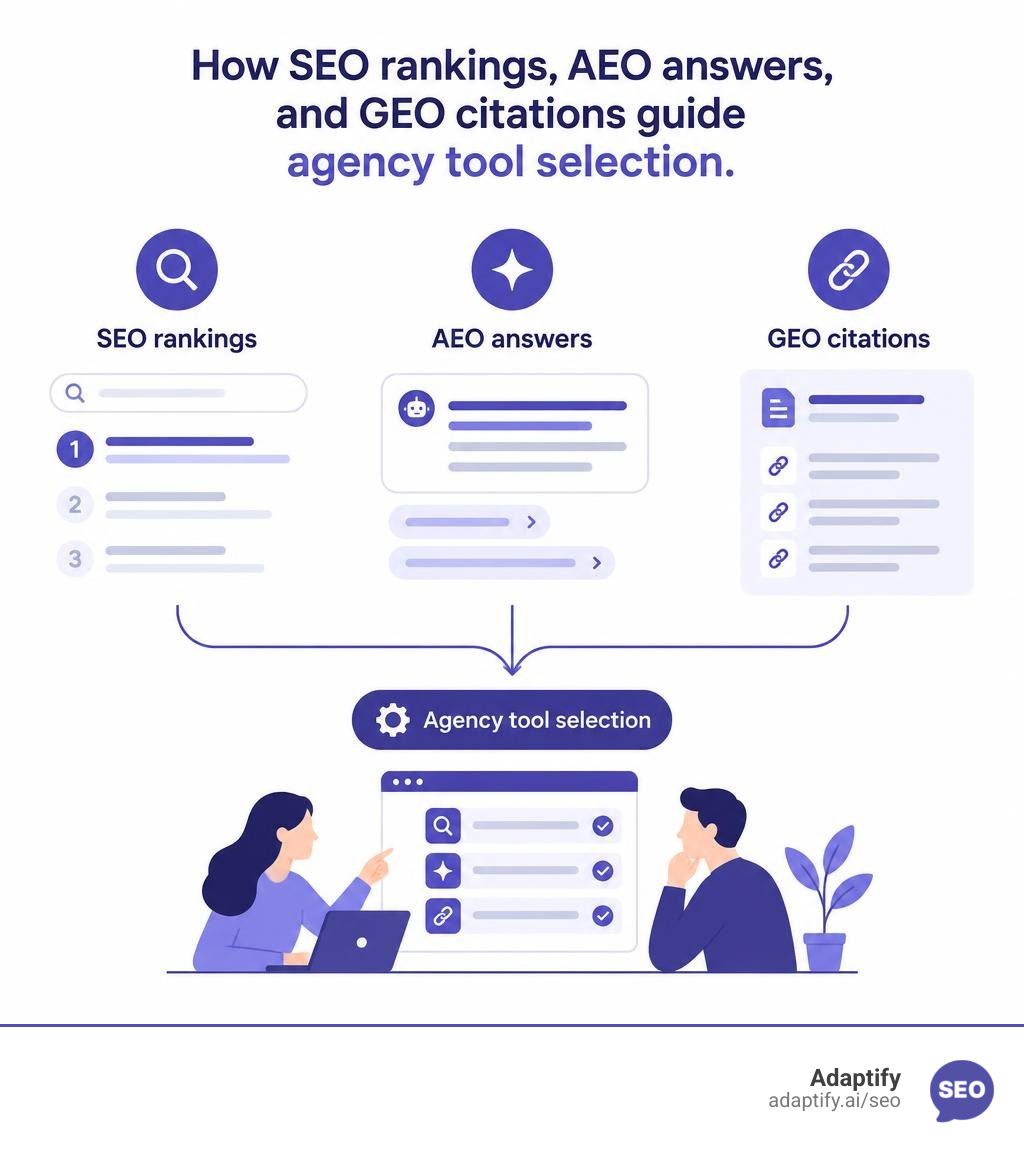
Search habits continue to evolve. AI-generated content and answer summaries appear across more than 50% of search result pages, contributing to approximately 60% of Google searches remaining clickless. Traditional search optimization aims to rank standard blue links for targeted keyword queries. In contrast, generative engine optimization (GEO) and answer engine optimization (AEO) ensure AI assistants retrieve, summarize, and cite a brand when users ask conversational questions.
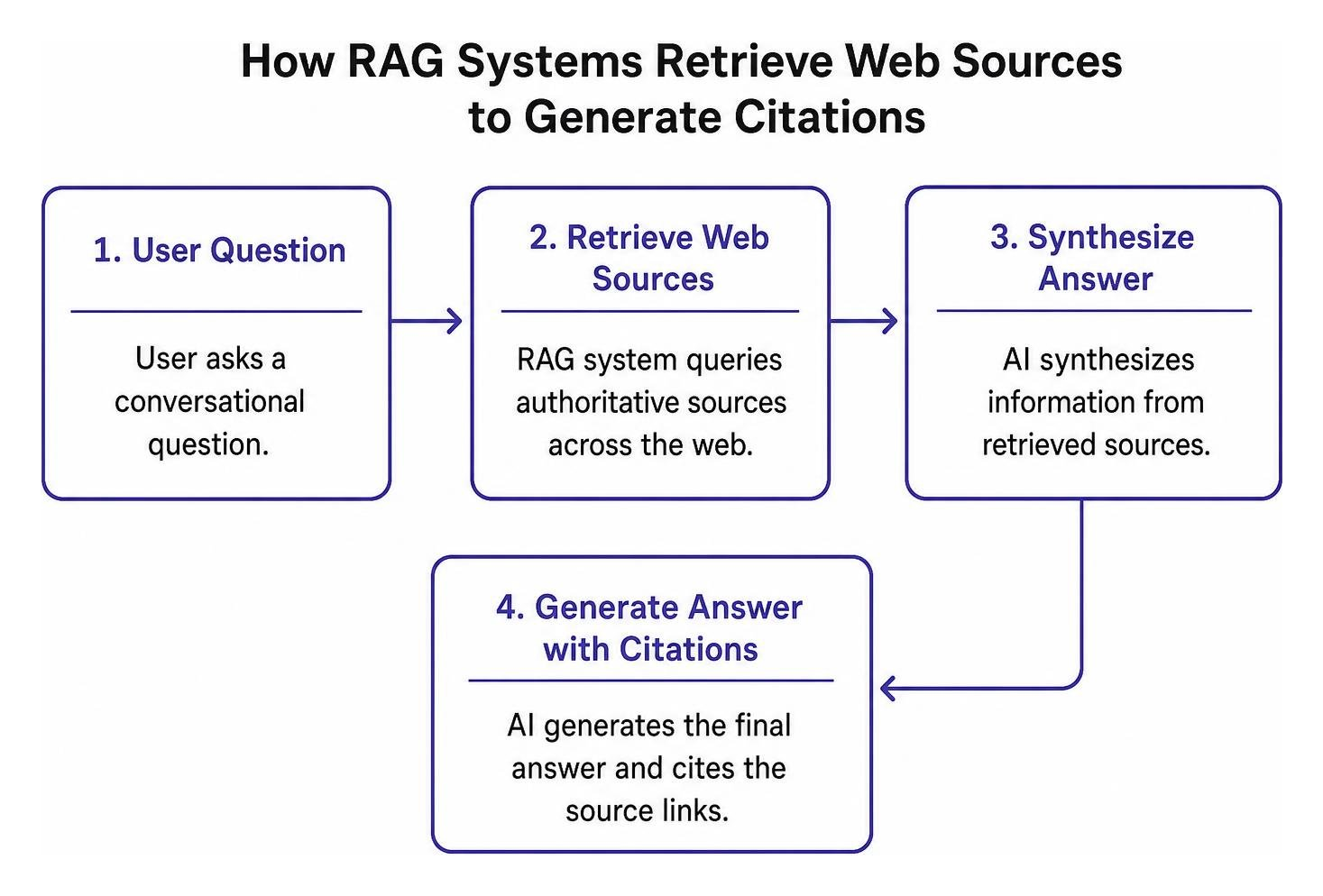
Understanding the AI advantage for agency SEO means recognizing that large language models (LLMs) rely on Retrieval-Augmented Generation (RAG). These systems query authoritative sources across the web to synthesize responses in real time. Instead of matching single keywords, AI engines prioritize entity authority, data density, and cross-source consensus. Adopting practical AI content solutions allows agencies to build machine-readable structured assets that satisfy both traditional ranking algorithms and generative models.
AI visibility measures how often and how accurately an answer engine references a client. Key metrics include:
Earning citations requires high information density. Research indicates that incorporating distinct data points, expert quotes, and clear author attribution boosts AI citation rates by 30% to 40% over generic informational text.
Managing dozens of client retainers requires specialized software stacks that support multi-account operations, automated execution, and clean client reporting.

| Workflow Category | Primary Agency Use Case | Multi-Client Management | Key Capabilities |
|---|---|---|---|
| AI Visibility Platforms | Answer-engine tracking & citation share | Per-client workspaces | Prompt monitoring, citation analysis, competitor benchmarking |
| SEO Research Suites | Technical audits & organic keyword analysis | Project grouping | Backlink audits, rank tracking, crawl analysis |
| Content Optimization | Entity mapping & on-page structure | Team permissions | Content scoring, schema recommendations, NLP term gaps |
| Content & PR Automation | End-to-end execution & digital PR | Automated agency workflows | Strategy design, automated drafts, media link building |
Modern agencies monitor visibility across generative discovery platforms including ChatGPT, Claude, Perplexity, Gemini, Copilot, Grok, and Google AI Overviews. Dedicated visibility platforms track brand mentions, analyze competitor citations, and evaluate whether the assistant provides factual information. These tools highlight knowledge gaps where competitors get recommended instead, showing teams exactly what topics require new content.
Content research tools analyze existing top-performing documents and generative answers to outline comprehensive topic clusters. They identify missing entity relationships, recommend structural headings, and propose direct-answer FAQ sections. Structuring content for fast machine extraction ensures search crawlers understand core facts without wading through fluff.
Scaling output across multiple accounts requires streamlined execution. Modern agencies rely on automated SEO workflows to handle technical research, draft creation, and digital PR link building. Building a repeatable AI content strategy combines machine efficiency with rigorous editorial oversight. Human editors verify factual accuracy, apply client brand voice guidelines, and insert proprietary research before publishing.
Software designed specifically for agencies must reduce administrative drag. Essential platform features include:
Selecting software requires looking past marketing promises and evaluating operational utility. Reviewing independent roundups of AI tools for agency teams helps shortlist platforms based on verified user experiences.

The primary evaluation criterion is data quality. Platforms relying on real-user prompt streams provide deeper insight into customer behavior than systems that merely reformat traditional search volume into synthetic questions. Selecting dedicated AI tools for search visibility ensures campaign strategies address genuine consumer demand.
Demonstrating value requires connecting generative visibility to tangible pipeline gains. Specialized AI search strategies deliver clear commercial impact: businesses adopting structured AI optimization programs have realized a 90% increase in lead generation and 60% year-over-year revenue expansion. Client accounts regularly generate over 11,500 visits from AI search engines within three months of deployment.
Agencies prove return on investment by reporting:
Monitoring must extend beyond a single platform. Buyer intent shifts based on demographics, task complexity, and interface preference. Tracking systems should measure:
AI visibility data serves as a powerful business development asset. Running prospect audits during the sales cycle identifies immediate competitive deficits. In live pitch environments, agencies can demonstrate how generative tools recommend competing brands across priority buyer prompts. Showing an actionable roadmap to elevate category visibility from zero to over 80% creates an urgent, data-backed case for new client retainers. Unlocking AI's broader agency potential transforms prospective client conversations into strategic consulting engagements.
Traditional SEO optimizes websites to rank standard URLs in classic search engine index lists. Answer Engine Optimization (AEO) structures content to claim direct answer boxes, voice search snippets, and conversational query summaries. Generative Engine Optimization (GEO) focuses on multi-source entity validation, ensuring that generative AI models cite and recommend the brand during complex, multi-step synthetic responses.
Agencies should verify whether the software vendor captures actual consumer conversation logs or relies on keyword extrapolation. Platforms using anonymized user panels, front-end scraping, or server-level retrieval monitoring provide authentic conversational demand signals. Tools that generate synthetic prompt lists from static keyword databases offer less precision for emerging topics.
No tool or agency can guarantee permanent placement inside AI-generated responses. Large language models use dynamic retrieval processes that weigh real-time authority, multi-source consensus, context, and personalization. Effective optimization builds consistent web-wide authority, clear structured data, and high-quality digital PR mentions to maximize the probability of citation.
Winning in the generative search landscape requires combining scalable automation with human expertise. Software accelerates data extraction, identifies entity gaps, and automates production, but agency strategists must provide the creative positioning, technical judgment, and quality control that build lasting brand authority.
Agencies looking to scale client retainers without expanding overhead can adopt automated agency SEO solutions to streamline entire campaign lifecycles. Adaptify provides an automated platform that manages strategy formulation, programmatic content generation, and digital PR link building in one unified environment. Delivering comprehensive search and AI visibility allows agencies to maximize operational efficiency while securing measurable client growth.

Choose an effective link building service without buying spam by comparing provider types, costs, and quality signals for sustainable SEO ...

Stop being invisible: discover what the best local SEO strategies for small businesses are to dominate Google Maps, reviews, and AI search...
Master localized SEO to rank your local business in Google Maps and drive more in-store visits.
Join 1,000+ agencies already delivering SEO and AI visibility from a single platform without increasing their headcount.Join 1,000+ agencies already delivering SEO and AI visibility from a single platform without increasing their headcount.