Local SEO Help: The Ultimate Guide to Dominating Your Neighborhood Search


If you're looking for help with local SEO, here's the fastest path to results:
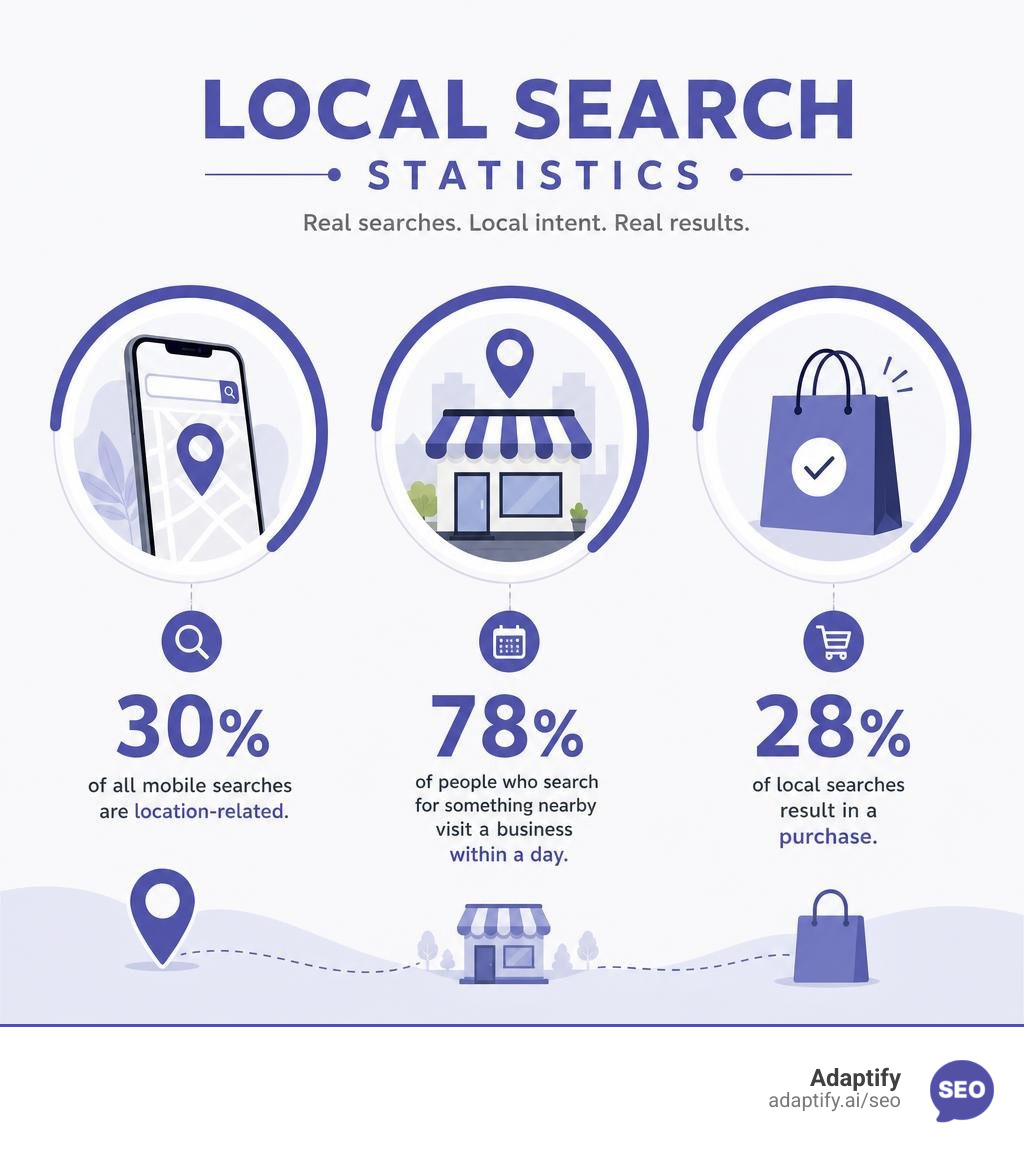
Local search is one of the most direct lines between a potential customer and a purchase. Consider this: 30% of all mobile searches are location-related, and 78% of people who search for something nearby visit a business within a single day. That's not a slow, long-game marketing channel — that's intent meeting action at remarkable speed.
Yet most local businesses — and the agencies managing them — are leaving serious money on the table. Google's local results are competitive, and the rules are more demanding in 2026 than they've ever been. The Map Pack, organic blue links, AI-generated summaries, and review signals are all fighting for the same click. Getting noticed requires proving relevance, geographic fit, and trustworthiness — all at once.
The good news? A small business with the right local SEO foundation can genuinely outrank a national brand. Proximity and relevance carry heavy weight in Google's local ranking system. You don't need a massive budget. You need the right strategy, executed consistently.
I'm Hansjan Kamerling, a product designer and marketing consultant who has helped scale digital platforms serving millions of users — and help with local SEO is one of the most consistent growth levers I've seen work across industries. This guide breaks down exactly what moves the needle in 2026, so you can stop guessing and start ranking.
When you search for a service nearby, Google serves two completely distinct types of results on the same page. Understanding the difference between them is the secret to prioritizing your optimization efforts.
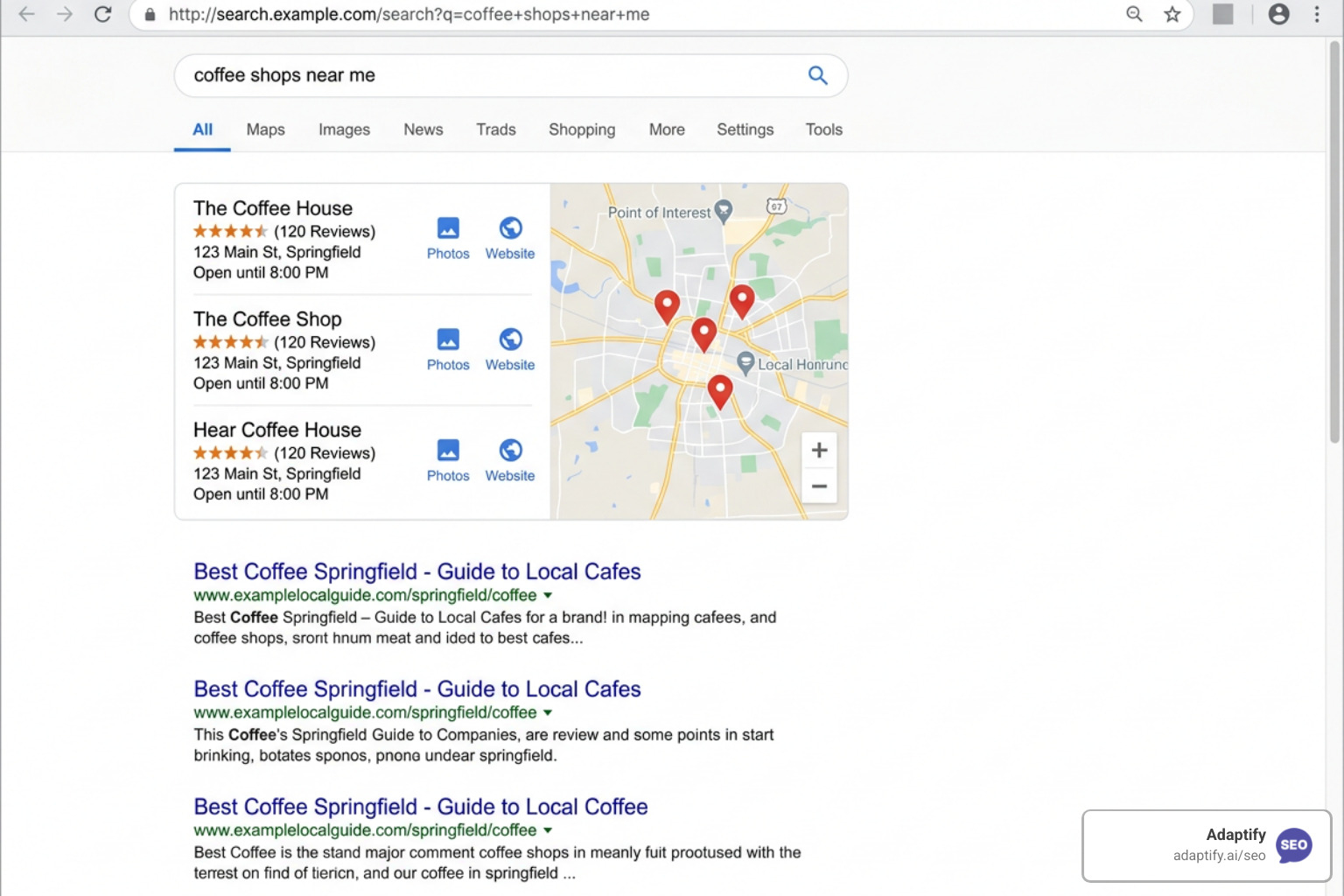
First, there is the Google Map Pack (often called the Local Pack). This is the highly visible map and three-business list that appears at the absolute top of the search results for searches with local intent. Second, there are the traditional organic blue link results that sit below the Map Pack.
While they appear together, Google uses entirely different algorithms to rank them:
To help you visualize where to focus your energy, I have mapped out the key differences in ranking weights below:
| Ranking Signal | Map Pack Weight (Perceived) | Organic Search Weight (Perceived) | Key Optimization Actions |
|---|---|---|---|
| Google Business Profile | 36% (Most Important) | Low | Complete 100% of profile, select precise categories |
| On-Page Signals | Moderate | 34% (Most Important) | Keyword optimization, location pages, schema markup |
| Links & Authority | Moderate | 31% | Local sponsorships, partner links, competitor link matching |
| Reviews & Sentiment | 17% | Low | Systematic review acquisition, keyword-rich reviews |
| Citations & NAP | 7% | Low | Cleanup of name, address, and phone consistency |
If you want to dive deeper into how these algorithms function together, check out this Local SEO 2026: How to Rank in Google Maps & Local Pack guide and read our breakdown on The Ultimate Guide to Local SEO Strategies.
Traditional SEO is about ranking for broad keywords across the globe. Local SEO is about owning a specific radius around your physical coordinates. Because proximity is a major ranking factor, local search queries behave very differently than national ones.
If you are trying to manage multiple clients or scale an agency, doing this manually is incredibly time-consuming. You have to monitor local rankings at the ZIP code level, clean up messy directory data, and constantly adapt to algorithm shifts. Getting professional, automated support helps you secure those top spots without spending forty hours a week on manual entry.
For a complete primer on how to build a foundation from scratch, take a look at Cracking the Local Code A Beginners Guide to SEO Success and explore the insights in this Local SEO for Small Businesses: A Complete 2026 Guide.
Your Google Business Profile (GBP) is the single most important asset for local search success. If you do not optimize this, you are effectively invisible on Google Maps.
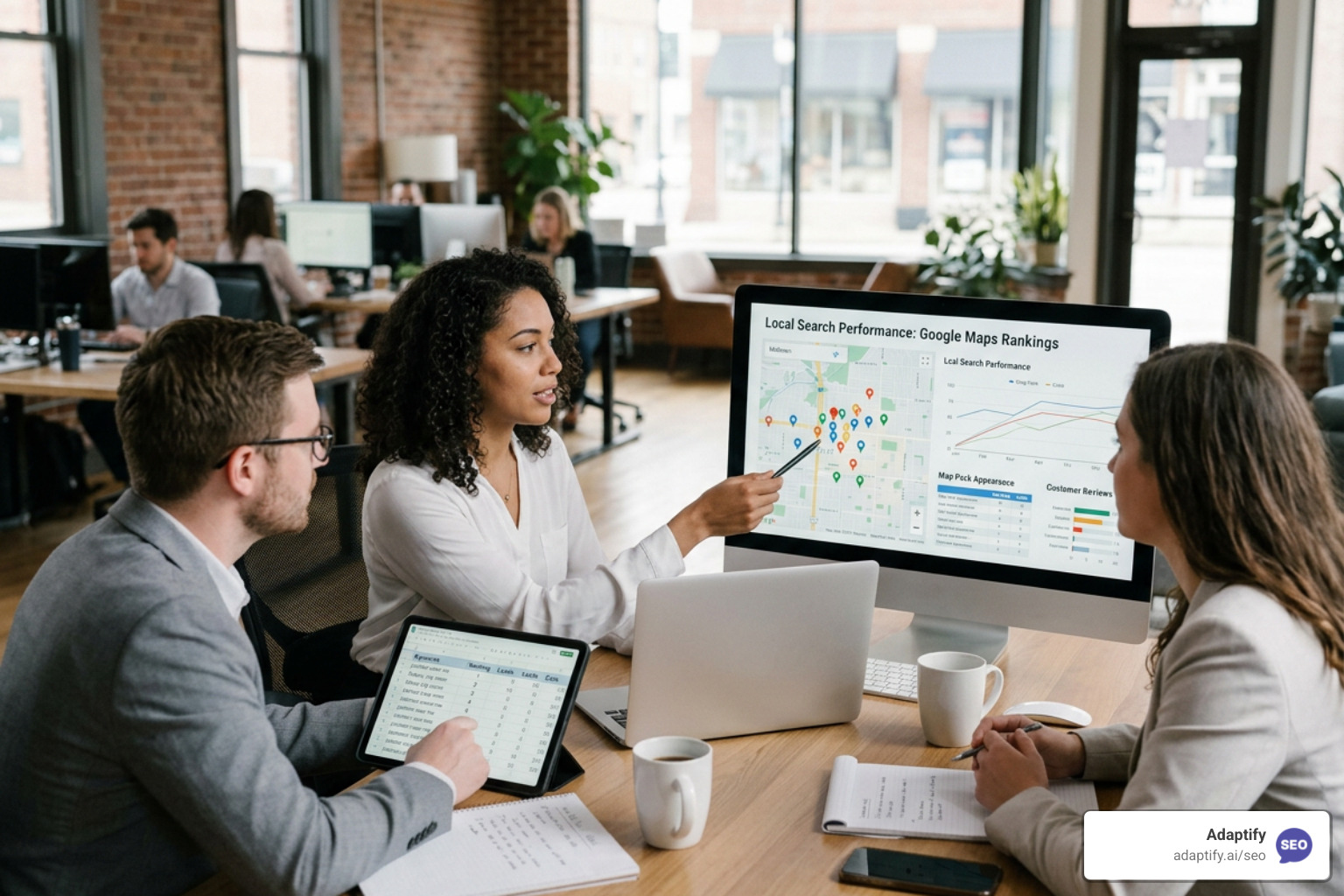
To fully optimize your profile in 2026, follow these foundational steps:
For a step-by-step framework on monitoring these optimizations, read our guide on Google Business Profile Tracking How to Monitor Your Local Search Success.
Prominence is Google's way of measuring your business's credibility. The primary ways Google measures this are through online reviews and local citations.
When it comes to reviews, recency and velocity matter just as much as your overall star rating. A business with 150 reviews from three years ago will often lose to a competitor with 40 reviews, 10 of which were left in the last month. Furthermore, reviews that naturally use service-specific keywords (e.g., "best emergency boiler repair in Denver") help Google associate your profile with those specific search terms.
Citations are mentions of your business's Name, Address, and Phone number (NAP) across the web. These come in two forms:
Maintaining 100% NAP consistency across all of these platforms is non-negotiable. If your business is listed as "John's Plumbing LLC" on Google, but "John Daniel Plumbing" on Yelp, Google's algorithm gets confused about whether these are the same entity, weakening your prominence score.
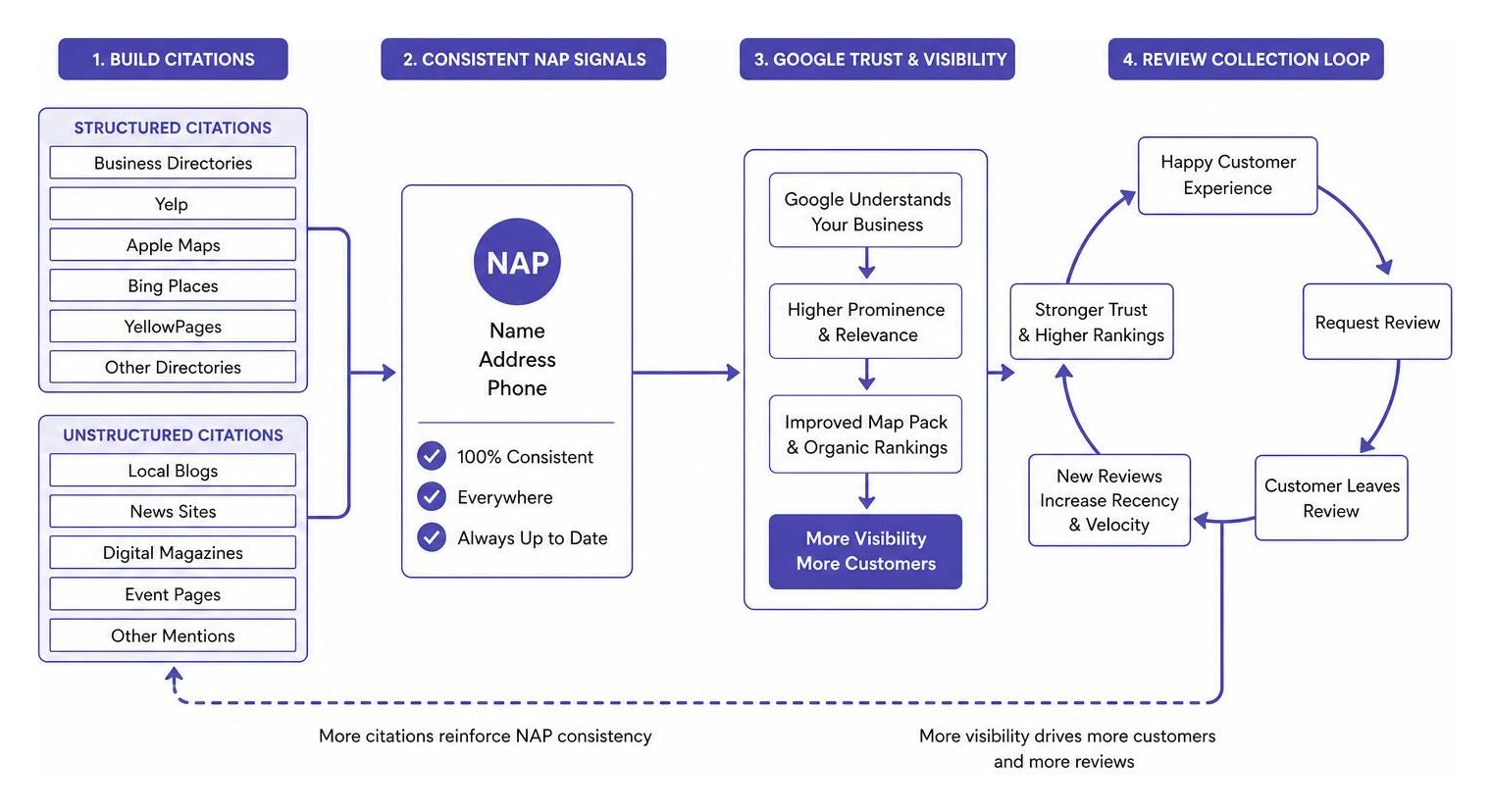
To learn more about auditing your existing listings, read this Local SEO Ranking Factors Checklist 2026 | YOOtraffic and check out our resource on Local Rank Tracking The Secret Sauce for Hyperlocal Visibility.
While your Google Business Profile drives Map Pack rankings, your website's on-page and technical SEO are what push you to the top of the organic blue links.
First, your site structure must support local intent. Rather than grouping all your services onto a single homepage, create dedicated service pages (800 to 1,500 words) and separate location pages (1,000 to 1,500 words) for each major city or neighborhood you target. Each location page must feature completely unique content—such as local testimonials, regional FAQs, and neighborhood-specific landmarks—rather than just swapping out the city names on duplicate templates.
Second, implement LocalBusiness Schema Markup. This structured data code tells search engine crawlers exactly what your business name, physical address, phone number, hours, and service categories are in a machine-readable format.
Finally, prioritize mobile optimization and internal linking. Over 60% of local searches happen on mobile devices. If your site does not load in under three seconds or is difficult to navigate on a smartphone, your bounce rate will skyrocket, hurting your rankings. Ensure your internal linking structure connects your core service pages directly to your local landing pages to pass authority throughout the site.
For a deeper dive into technical maintenance, read this Complete Checklist & Maintenance: The Complete Local Business Website & SEO Guide for 2026 | Luminous Digital Visions and see how this applies to specific niches in Why Your Real Estate Website Needs a Local SEO Makeover Right Now.
What if you do not have a physical storefront? Service-area businesses (SABs)—like plumbers, electricians, landscapers, and mobile pet groomers—often struggle with local SEO because they do not want customers showing up at their home address.
Fortunately, Google accommodates this. When setting up your Google Business Profile, you can choose to hide your physical street address and instead define your service areas. You can specify up to 20 cities, counties, or ZIP codes, or set a specific radius around your base.
To build prominence without a storefront, focus heavily on local backlinks. Sponsor local youth sports teams, join your local Chamber of Commerce, partner with non-competing local businesses for cross-promotions, and get featured in neighborhood news outlets. These hyper-local links carry massive geographic weight that national competitors cannot replicate.
If you are an agency managing these types of clients, check out our Local SEO Success Templates to Win Over Your Hometown Clients and read this detailed Local SEO for Small Business: Complete USA Guide (2026).
Search behavior is shifting rapidly. With the rise of AI Overviews (formerly SGE), users are increasingly typing long, conversational, multi-intent queries like: "Where can I find an emergency plumber near me that fixes copper pipes and has 24-hour service?"
The good news is that local search is highly resistant to AI disruption. While AI can easily summarize informational topics, it cannot physically fix a burst pipe or deliver a pizza. For transactional local queries, Google's AI Overviews still rely heavily on Google Business Profile data and highly localized, first-person web content to recommend real-world businesses.
To stay ahead, optimize your content for these conversational queries. Build comprehensive FAQ sections on your service pages that answer specific local constraints, licensing requirements, and pricing questions.
To learn more about optimizing for this new search paradigm, read our guides on Local SEO is Dead Long Live GEO Boosting Local Visibility in AI and the Beginners Guide to GEO AI SEO.
Managing local SEO at scale is a constant battle of details. Between GBP updates, review monitoring, citation cleanup, local link building, and technical website maintenance, it is easy for agencies to get bogged down in manual, administrative tasks.
This is where automation becomes your competitive advantage. At Adaptify.ai, we offer automated SEO services built specifically to help agencies scale. We streamline the entire local SEO workflow—from hyper-local keyword strategy formulation and localized content creation to high-authority PR link building—using advanced AI. Instead of spending hours managing individual listings and writing localized landing pages, you can let our platform handle the heavy lifting, allowing you to focus on growing your client roster.
Ready to automate your agency's local SEO workflow and dominate the neighborhood?

Compare health insurance for entrepreneurs with ACA plans, tax deductions, and subsidies to protect your business and budget.
Master search engine optimization and marketing with proven SEO and SEM strategies that boost visibility, drive organic traffic, and deliv...
Discover health insurance for engineers: group rates via ASCE, IEEE, portable plans, small firm options, and pro tips to save.
Join 1,000+ agencies already delivering SEO and AI visibility from a single platform without increasing their headcount.Join 1,000+ agencies already delivering SEO and AI visibility from a single platform without increasing their headcount.