SEO Hurdles: Identifying and Conquering the Biggest Challenges




SEO challenges are a crucial aspect every agency owner must confront to ensure their business thrives. This aspect of digital marketing is all about dealing with intricacies, moving parts, and overcoming potential problems. Here is a snapshot of some pressing challenges:
These elements can make SEO feel overwhelming, yet addressing them is critical for success. Each challenge, though complex, can be tackled with a strategic approach to refine your digital presence and boost your search rankings.
As the SEO landscape evolves, staying informed and adaptable is key. My name is Hansjan Kamerling, and I've been navigating these seo challenges for years. With a background in product design and digital marketing across various industries, I've helped businesses improve their online strategies amid these problems.

Book a Demo with Adaptify to explore automated solutions custom to meet your SEO needs.
Navigating SEO in 2024 is like trying to hit a moving target. The landscape keeps changing, and staying ahead is no small feat. Let’s dive into the top SEO challenges this year and how to tackle them head-on.
Google's search algorithm is constantly evolving. In 2023 alone, there were over 4,000 changes to search. This means marketers must stay on their toes, ready to adapt to new rules. The key? Stay informed but don't panic. Respond strategically to major updates rather than overhauling your entire strategy for every tweak. Keeping up with industry news can help you anticipate significant shifts and adapt accordingly.

The rise of AI tools like ChatGPT has revolutionized content creation. However, relying solely on AI-generated content can lead to issues like unoriginality and misinformation. Use AI as a supplemental tool to improve your content creation process. For instance, AI can help gather research or generate ideas, but ensure a human touch for originality and accuracy. This balance can prevent the pitfalls of AI while leveraging its benefits.
The digital space is more crowded than ever. With competitors vying for the top spots on search engine results pages (SERPs), standing out is challenging. Focus on what makes your brand unique and communicate that clearly. Prioritize quality over quantity in content creation and invest in building strong, authentic backlinks. A long-term strategy centered on value often outpaces quick fixes.
Page authority is crucial for ranking well on Google. However, it’s not just about the number of links pointing to your site. Quality matters more than quantity. Building page authority involves creating valuable, engaging content that naturally attracts links from reputable sources. It's a slow process, but the payoff is worth it.
In today’s world, users expect quick load times. Slow-loading pages can drive visitors away, negatively impacting your SEO. Use tools like Google PageSpeed Insights to identify bottlenecks and optimize your site’s performance. Focus on improving Core Web Vitals to improve user experience and boost your search rankings.
These SEO challenges might seem daunting, but with the right approach, they can be overcome. By staying informed, leveraging technology wisely, and focusing on quality, you can steer the complexities of SEO in 2024 and come out on top.
Book a Demo with Adaptify to explore automated solutions custom to meet your SEO needs.
When it comes to SEO, targeting the right keywords is like finding a treasure map. It guides potential customers straight to your doorstep. But how do you pinpoint these golden phrases? The answer lies in keyword research.
Keyword research is the foundation of any successful SEO strategy. It's about identifying the terms your audience uses when searching for products or services like yours. Start by brainstorming a list of words and phrases related to your business. Tools like Semrush's Keyword Magic Tool can then expand this list, offering insights into search volume and competition.
In the vast ocean of search terms, long-tail keywords are the hidden gems. These are longer, more specific phrases that might have lower search volumes but also face less competition. For example, instead of targeting "shoes," you might focus on "eco-friendly running shoes for women."
Why are long-tail keywords so valuable? They often indicate higher user intent. Someone searching for "eco-friendly running shoes for women" is likely closer to making a purchase than someone just typing "shoes." By focusing on these precise terms, you can attract traffic that’s more likely to convert.
Understanding user intent is crucial in keyword targeting. User intent refers to what the searcher is looking to achieve. Are they seeking information, looking to make a purchase, or just browsing? By aligning your content with the intent behind search queries, you can better meet user needs and improve your chances of ranking.
For example, if someone searches "how to tie a knot," they probably want instructional content. Creating a detailed guide or video on this topic can fulfill their intent and boost your SEO performance.
By mastering keyword research, leveraging long-tail keywords, and understanding user intent, you can sharpen your SEO strategy and outpace the competition.
Book a Demo with Adaptify to explore how our automated tools can streamline your keyword research process.
When it comes to SEO challenges, page speed is a critical factor that can make or break your website's performance. A slow-loading page doesn't just frustrate users; it also sends negative signals to search engines like Google, affecting your site's ranking.
Page speed refers to how quickly your website loads and displays content to users. In today's digital world, users expect websites to load in a flash. If your pages take too long, visitors are likely to bounce back to the search results, costing you valuable traffic and potential conversions.
Google's Core Web Vitals are a set of metrics that measure key aspects of user experience. They focus on three main areas:
Improving these metrics can improve user experience and boost your search engine rankings.
To assess and improve your page speed, tools like Google PageSpeed Insights are invaluable. This tool analyzes your website and provides a comprehensive report on its performance, including actionable recommendations to speed things up.
Common suggestions for improving page speed include:
By addressing these factors, you can significantly improve your page speed, leading to better SEO performance and increased user satisfaction.
For businesses looking to optimize their page speed and improve Core Web Vitals, Book a Demo with Adaptify here to see how our automated solutions can help you conquer this SEO hurdle.
In SEO, algorithm updates are a constant hurdle. Google frequently updates its algorithms to improve search quality and user experience. These updates can significantly impact your site's search engine ranking, leading to fluctuations in search engine results pages (SERP).
Google's algorithm updates can be as small as a tweak or as significant as a core update. Each update can shift the landscape of search rankings, sometimes causing unexpected drops or gains in visibility. For instance, the August 2023 Core Update led to noticeable traffic changes for many websites.
SERP volatility is a common result of these updates. Websites that once held top positions can suddenly find themselves lower in the rankings, while others may rise unexpectedly. This can be frustrating for businesses that rely heavily on organic traffic.
To steer these SEO challenges, it's crucial to stay informed about the latest algorithm changes. Here are some strategies:
When an algorithm update hits, assess its impact on your site. Analyze traffic patterns and identify any pages that have been affected. Sometimes, waiting a few weeks can allow the SERP to stabilize, giving you a clearer picture of where you stand.
If your site has been negatively impacted, revisit your SEO strategies. Focus on the fundamentals: high-quality content, a positive user experience, and technical SEO best practices. While Google's algorithms change, the core principles of SEO remain consistent.
For businesses seeking to steer these updates efficiently, Book a Demo with Adaptify here to explore how our automated SEO solutions can keep you ahead of the curve.
In today's digital landscape, AI tools like ChatGPT are reshaping how content is created. While these tools offer convenience and speed, they also bring unique SEO challenges—specifically around content originality and quality.
AI-generated content is becoming more common. Tools like ChatGPT can whip up articles in seconds. But there's a catch: AI can only draw from existing data. This often leads to content that lacks originality and might not stand out.
Moreover, AI can sometimes "hallucinate," meaning it generates incorrect information. If you're not careful, these errors can slip into your content, potentially harming your credibility.
So, how do you use AI without compromising quality? The key is to use AI as a supplemental tool. Here's how:
Research Aid: Use AI to gather information quickly. This saves time but remember to verify the facts.
Content Drafting: Let AI draft an outline or a rough draft. Then, add your unique insights and experiences to make it original.
Editing: Always edit AI-generated content thoroughly. Ensure it aligns with your brand's voice and style.
Original, high-quality content is crucial for SEO success. Here are some strategies to maintain originality:
Fact-Check: Double-check all information for accuracy. AI can miss nuances that a human expert might catch.
Add Value: Include personal stories, case studies, or unique insights to provide value that AI can't replicate.
Stay Updated: Keep up with the latest trends and news in your industry. This helps you create timely, relevant content that resonates with your audience.
While AI tools are powerful, they should complement, not replace, human expertise. The goal is to create content that is both efficient and effective. By striking a balance between AI and human input, you can ensure your content remains fresh, engaging, and SEO-friendly.
For businesses looking to harness the power of AI while maintaining content quality, Book a Demo with Adaptify here to see how our solutions can lift your content strategy.
When it comes to SEO, content quality is king. High-quality content is the backbone of effective SEO strategies. It not only boosts your search engine rankings but also improves user engagement. However, many businesses still grapple with producing content that meets these standards.
Low-quality content can be a major hurdle in achieving SEO success. If your content is shallow or irrelevant, users will quickly leave your site, leading to higher bounce rates and lower rankings. Google’s algorithms are designed to prioritize content that is informative and engaging.

To ensure your content is SEO-friendly and engaging, consider these strategies:
Address User Intent: Understand what your audience is searching for and tailor your content to meet those needs. This approach not only satisfies search engines but also keeps readers engaged.
Use Clear and Concise Language: Avoid jargon and complex sentences. Keep your content clear and to the point, making it accessible to a wider audience.
Incorporate Visuals: Use images, infographics, and videos to break up text and make your content more engaging. Visuals can also improve comprehension and retention.
Update Regularly: Keep your content fresh by updating it with the latest information and trends. This shows search engines that your site is active and relevant.
User engagement is a critical factor in SEO. Engaged users are more likely to share your content, increasing its reach and impact. Here’s how to boost engagement:
Interactive Elements: Add quizzes, polls, or interactive infographics to make your content more engaging.
Encourage Comments: Invite readers to share their thoughts and questions. This interaction can provide valuable insights and foster a community around your content.
Optimize for Mobile: Ensure your content is easily accessible on mobile devices. With more users browsing on their phones, mobile optimization is crucial for engagement.
Sometimes, creating high-quality content requires expert help. Skilled copywriters can craft content that aligns with your brand and resonates with your audience. If you’re struggling with content creation, consider leveraging professional services.
For businesses aiming to improve their content quality and user engagement, Book a Demo with Adaptify here to find how our solutions can help you conquer these SEO challenges.
In today's digital landscape, mobile-friendliness is not just an option—it's a necessity. With over 58% of web traffic coming from mobile devices, ensuring your website is responsive and accessible on all devices is crucial for a successful SEO strategy.
Responsive design is about creating web pages that look good on all devices, from desktops to smartphones. This design approach automatically adjusts the layout based on the screen size, ensuring a seamless user experience.
Think of it like water flowing into different shaped containers—it adapts to fit perfectly. A responsive design not only improves user experience but also reduces bounce rates, as visitors are more likely to stay on a site that is easy to steer on their mobile devices.
Google's shift to mobile-first indexing means that the search engine primarily uses the mobile version of a site for indexing and ranking. This change highlights the importance of having a mobile-optimized website. If your site isn't mobile-friendly, you risk losing visibility in search engine results.
To keep up with this trend, ensure your website is designed with a mobile-first mindset. This involves prioritizing mobile design during development and ensuring that all content and features are accessible on smaller screens.
A positive user experience (UX) is key to keeping visitors engaged. Here are some tips to improve UX on mobile devices:
Simplify Navigation: Use clear, easy-to-tap buttons and links. A streamlined menu helps users find what they need quickly.
Optimize Load Times: Mobile users expect fast-loading pages. Compress images, enable browser caching, and minimize code to speed up your site.
Readable Text: Ensure your text is legible without requiring users to zoom in. Use a font size that is easy to read on smaller screens.
Accessible Content: Make sure all content, including videos and images, is viewable on mobile devices. Avoid Flash and other outdated technologies that aren't supported on many smartphones.
By focusing on these areas, you can significantly improve your site's mobile-friendliness, leading to better search rankings and increased traffic.
For businesses looking to optimize their sites for mobile, Book a Demo with Adaptify here to explore how our solutions can help you overcome these SEO challenges.
Understanding the effectiveness of your SEO efforts is essential. This is where monitoring and analyzing SEO results come into play. It’s not just about setting up your strategy and letting it run. You need to keep a close eye on how things are performing.
Using analytics tools is like having a flashlight in a dark room. They help you see what's working and what isn't. Google Analytics is a popular choice that provides insights into visitor behavior, traffic sources, and conversion rates. By setting up a Google Analytics account, you can track how users interact with your site and which pages are performing well.
Tracking performance is about measuring your progress toward specific goals. Tools like Google Search Console offer valuable data on your website's search performance, including which queries bring users to your site and how your pages rank. Regularly checking these metrics helps you understand where improvements are needed.
Set goals for your SEO campaigns, such as increasing organic traffic or improving your site's ranking for certain keywords. Then, use analytics to track your progress over time. This data-driven approach allows you to make informed decisions on what to tweak or change in your strategy.
An SEO Checker is like a health checkup for your website. It analyzes your site's SEO setup and provides a report on areas that need improvement. For example, Adaptify offers tools that can help identify issues with page speed, mobile-friendliness, and keyword optimization.
Using an SEO Checker regularly ensures that your site remains in good health and is optimized for search engines. It highlights technical issues that might be affecting your visibility, such as broken links or missing meta tags.
By combining the insights from analytics, tracking performance, and using an SEO Checker, you can continuously refine your strategy to achieve better results. SEO is not a one-time task but an ongoing process of improvement.
For a comprehensive view of your current SEO performance and personalized recommendations, Book a Demo with Adaptify here and take the first step towards conquering these SEO challenges.
Website organization is like the skeleton of your online presence. If it's weak or disorganized, everything else struggles. A well-organized site helps users find what they’re looking for quickly, which is crucial for a positive user experience. Let's explore the key elements that can make or break your site's organization.
Think of navigation as the roadmap of your site. A clear and intuitive navigation system is essential for guiding visitors through your content. When users can easily find what they need, they’re more likely to stay longer and engage with your site. This sends positive signals to search engines, boosting your SEO.
Ever felt lost on a website? Breadcrumb navigation prevents that by showing users their path. It’s like leaving a trail of breadcrumbs to help visitors find their way back to previous pages. This feature not only improves user experience but also improves site structure for search engines.
User experience is the heart of a successful website. A well-organized site leads to a seamless experience, reducing bounce rates and increasing engagement. A happy user is more likely to convert into a customer.
By focusing on these elements, you can tackle one of the common SEO challenges: poor website organization. A well-structured site not only delights users but also earns favor with search engines.
To see how your site measures up and get custom insights, Book a Demo with Adaptify here and start optimizing your website organization today.
One of the most frequently cited SEO challenges is the overwhelming amount of information available. With new SEO strategies and tools emerging almost daily, it can be daunting to sift through what's truly effective. This information overload can lead to confusion and missteps in strategy.
Moreover, the constant evolution of powerful tools adds another layer of complexity. While tools like Semrush and Moz offer incredible insights, mastering them requires time and expertise. Many businesses struggle to leverage these tools to their full potential, which can hinder their SEO efforts.
Keyword difficulty is often considered the trickiest part of SEO. It's not just about selecting keywords with high search volumes; it's about finding the right balance between relevance, competition, and search intent. Targeting highly competitive keywords can be a losing battle, especially for newer websites without established authority.
Additionally, the competitive landscape in SEO is fierce. Every business wants to rank on the first page of Google, making it challenging to stand out. The competition is not just local; you're up against businesses from all over the world, each vying for those top spots in search results.
To effectively tackle these SEO challenges, staying updated is crucial. Following reputable sources like Search Engine Land or Google's own Search Central Blog can keep you informed about the latest algorithm updates and best practices.
Hiring a professional SEO agency can also make a significant difference. Agencies bring expertise, experience, and a fresh perspective to your SEO strategy. They can help steer complex tools and competitive landscapes, ensuring your business stays ahead.
Lastly, continuous learning and adaptation are key. SEO is not a one-time effort but an ongoing process. Regularly analyzing your website's performance using tools like Google Analytics and making data-driven adjustments will help in overcoming obstacles.
For personalized guidance and to see how automated solutions can improve your SEO strategy, Book a Demo with Adaptify here.
Navigating SEO can feel like a never-ending maze. With constant algorithm changes, the rise of AI tools, and fierce competition, it's easy to get overwhelmed. But here's the good news: Adaptify.ai is here to simplify the journey.
Adaptify.ai offers automated SEO solutions designed to streamline your SEO processes. By leveraging advanced AI technology, Adaptify takes the heavy lifting out of strategy formulation, content creation, and PR link building. This means you can focus more on your business and less on the nitty-gritty details of SEO.
Efficiency is at the heart of what Adaptify.ai provides. Imagine cutting down the time spent on manual SEO tasks and still achieving better results. That's the power of automation. With Adaptify, you get a comprehensive solution that not only saves time but also improves your SEO efforts.
If you're ready to conquer your SEO challenges and boost your online presence, consider taking the next step. Book a Demo with Adaptify.ai here and find how automated solutions can transform your SEO strategy.

Master GEO AI visibility to ensure ChatGPT, Gemini, and Perplexity cite your brand.
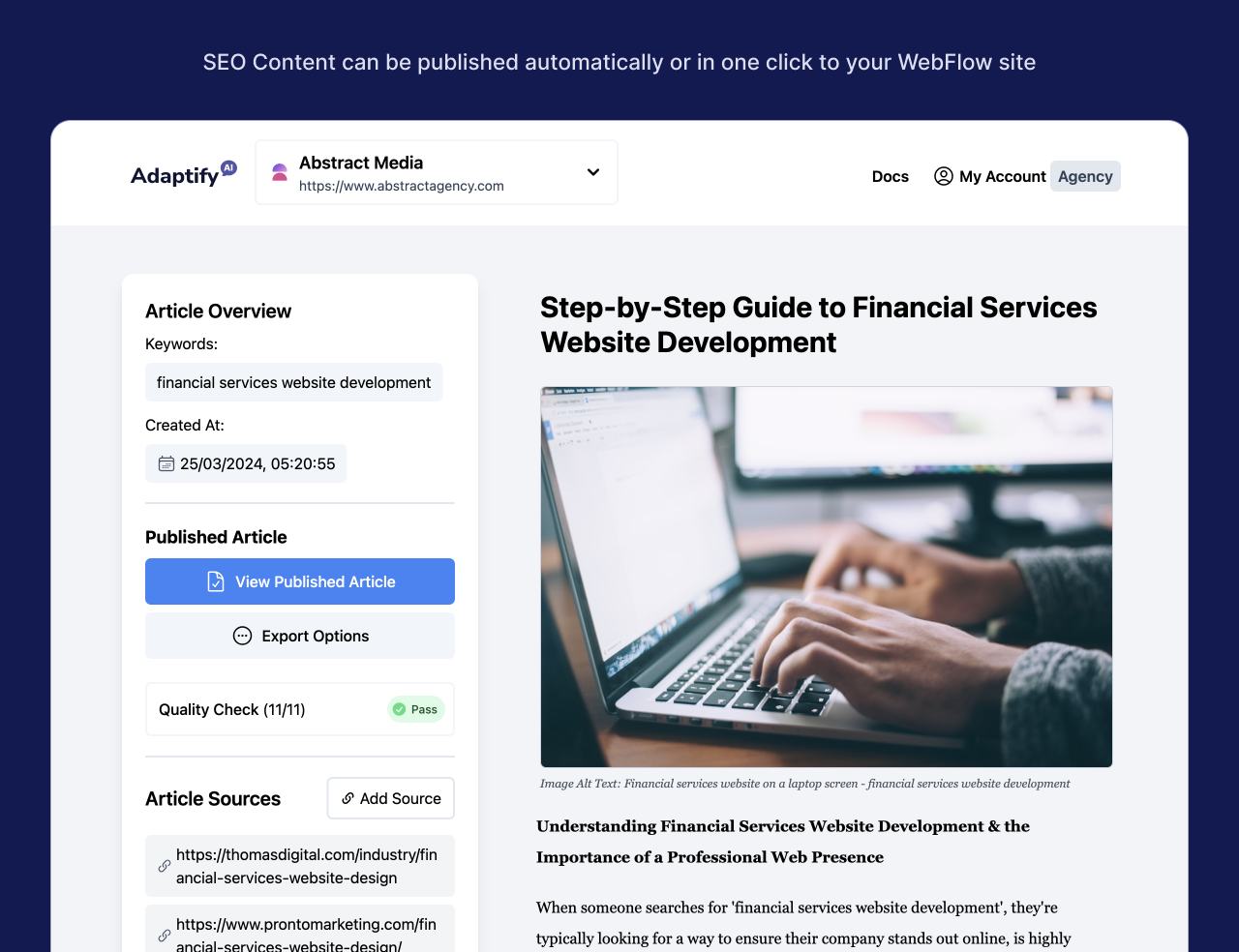
Discover how ai-driven insights services for seo agencies boost visibility, automate workflows, and scale profitability in the generative ...
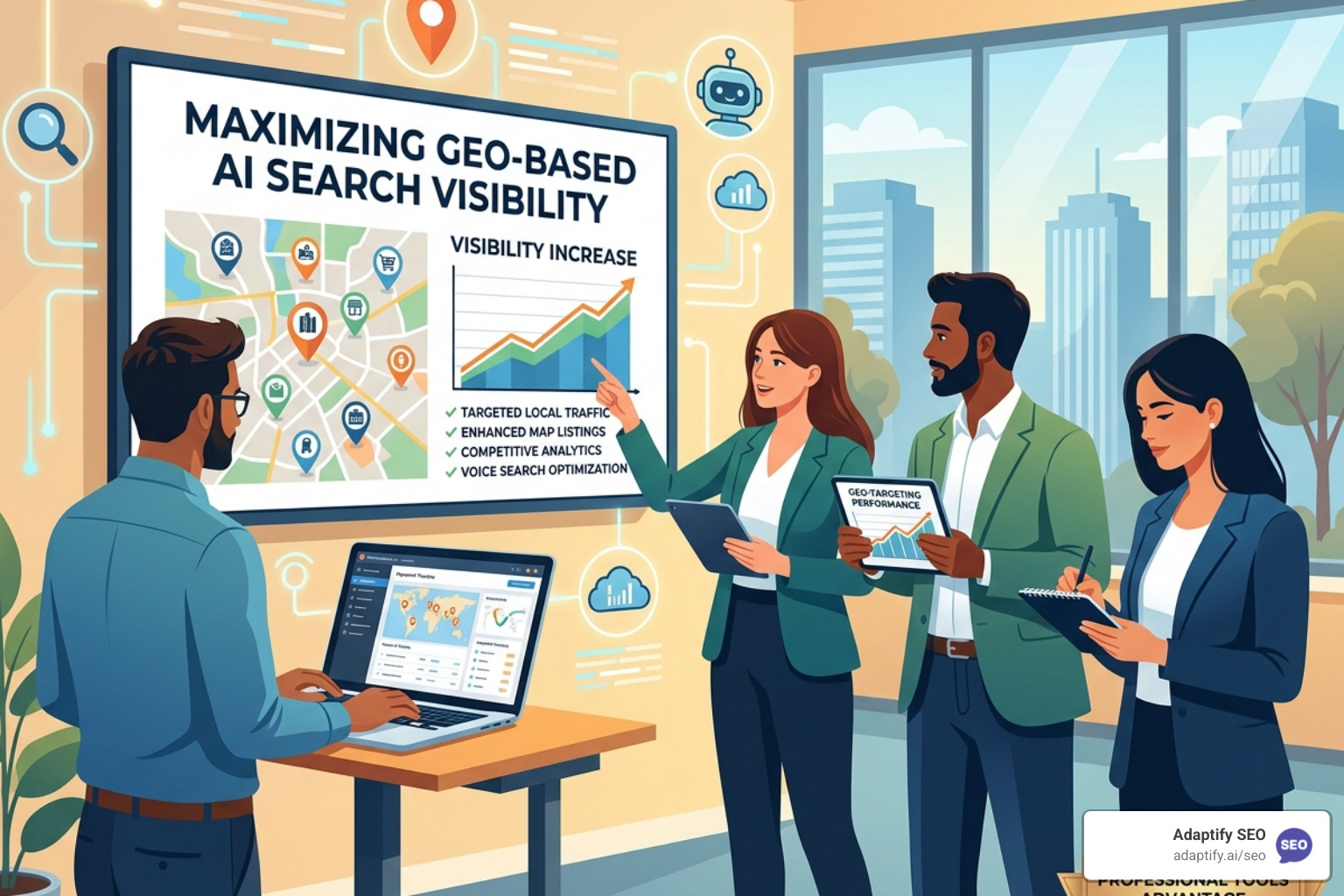
Discover benefits of professional tools for geo-based ai search visibility. Automate tracking, boost citations & outpace manual efforts in...
Join 1,000+ agencies already delivering SEO and AI visibility from a single platform without increasing their headcount.Join 1,000+ agencies already delivering SEO and AI visibility from a single platform without increasing their headcount.